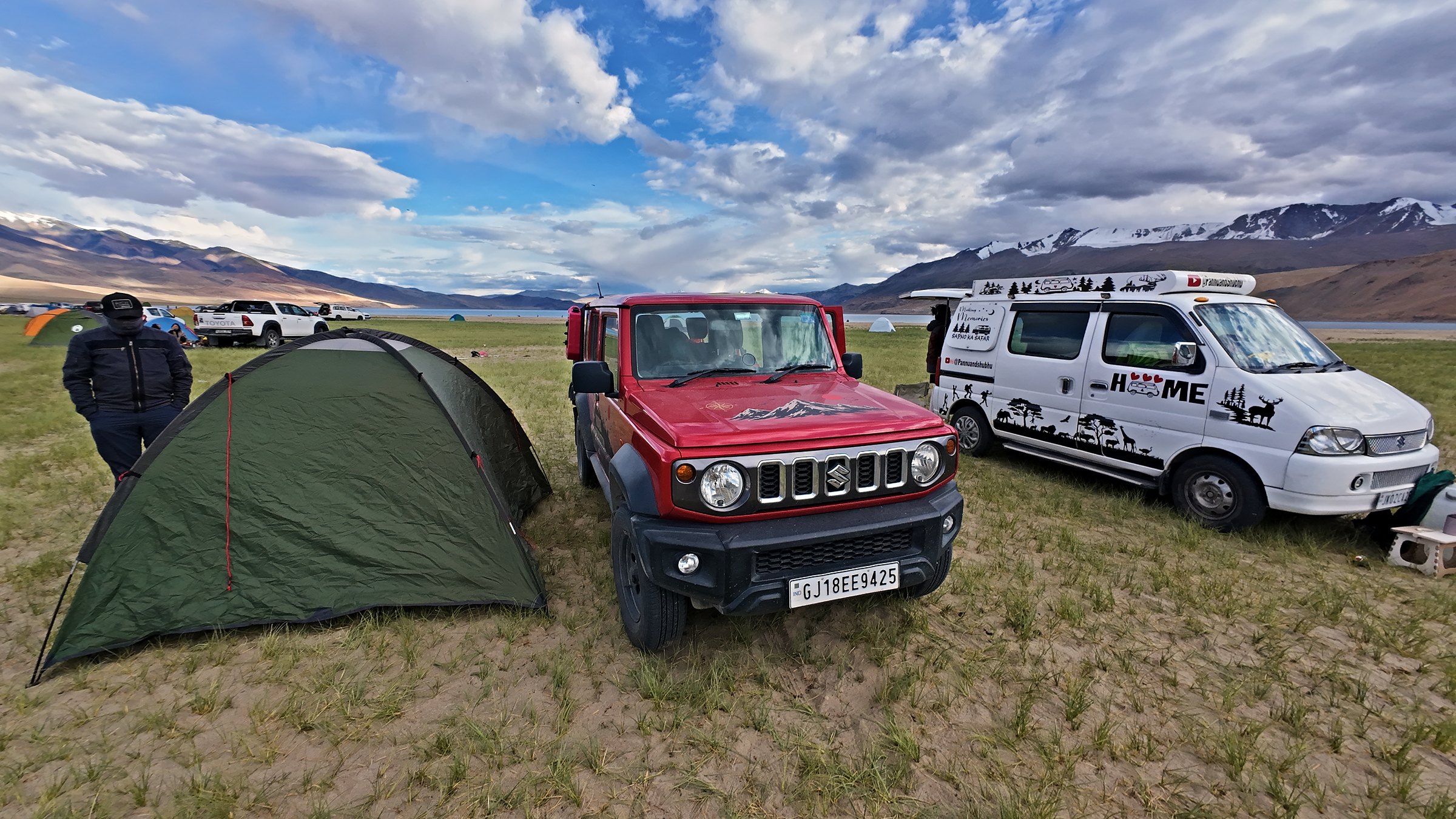
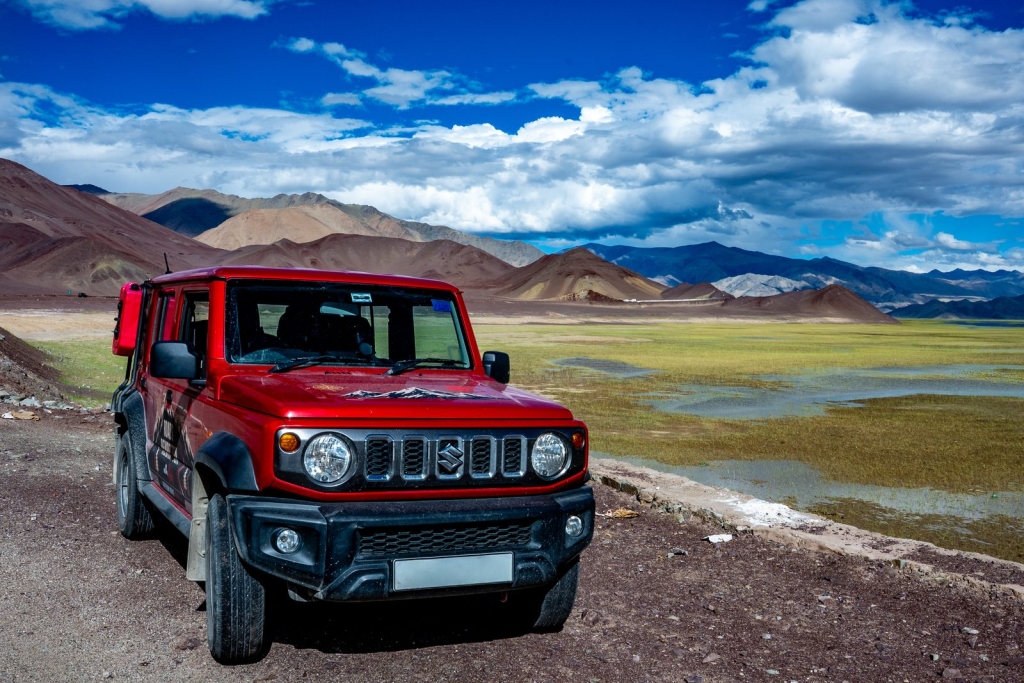
Some conversations find you on the road when you least expect them. I had driven my Jimny to Tso Moriri for the Changthang nomad festival, planning nothing more than a little off-roading and a night of camping by the lake. Instead, a van parked near the festival grounds, a friendly wave from its owners, and suddenly I was sitting across from Pannu and Shubhu — a couple from Nagpur who don’t live in a house anymore. They live on wheels.
A wave at Tso Moriri that became a story
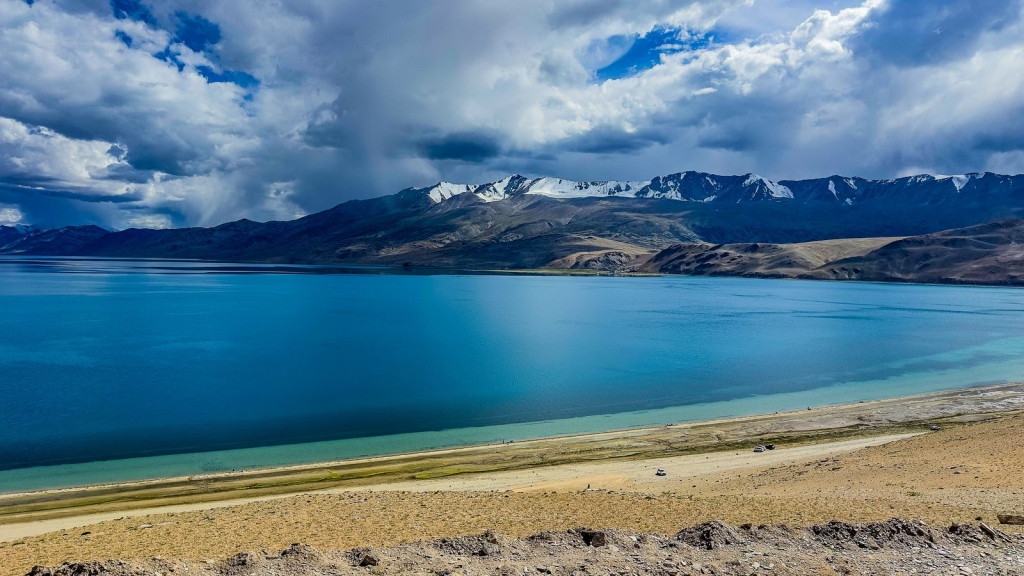
The festival was on at Korzok, where Ladakh’s nomadic tribes of the Changthang gather, and Tso Moriri lay shimmering just ahead. I spotted their van, they waved at me, and within minutes we were talking like old friends. Around them there were so many stories that I knew I had to put the camera on and simply listen.
Their van is called Kaira, and it is beautifully put together — a bed, a kitchen, spices neatly tucked away, blackout curtains for the morning, even a portable toilet. They proudly showed me what they call their “achievement board”: coffee at Umling La, a burger at Pangong, a cappuccino in the snow. Small wins, written down, celebrated. I found that lovely.
“Do saal ke baad kisne dekha?”
Shubhu told me their story from the beginning. Before 2023 he didn’t even know Pannu; things were moving in the direction of an arranged marriage, and he felt it was now or never. He climbed the 44 km to Vaishno Devi barefoot to ask the Mata for one thing — that this marriage should happen. He promised that if it did, he would bring his bride to her the very next day. They were married on the 2nd. On the 4th, they were at Vaishno Devi.
Like every newly married couple, they wanted to travel. Their first trip was through tour packages, and it felt expensive and restrictive — hotels cancelled at the last minute, food that was good in one place and poor in the next, and never the freedom to go where your heart pulls you. That is when the idea came to Shubhu: build a vehicle of their own.
And here is the part that stayed with me. His retirement is two years away. The sensible plan was to build the van after retiring. But he asked himself a simple question — do saal ke baad kisne dekha? Who has seen what two years from now will look like? Maybe the situation will be different. So he built Kaira now, and they have been travelling for the last seven months.
It is exactly what I keep saying at the end of every Roads Rewritten video: kar lo, jo mann karta hai, kar lo. Whatever your heart wants to do, do it. Hearing it from someone else, in his own words, high up beside a Himalayan lake, felt like a confirmation.
Living in today, not in yesterday or someday
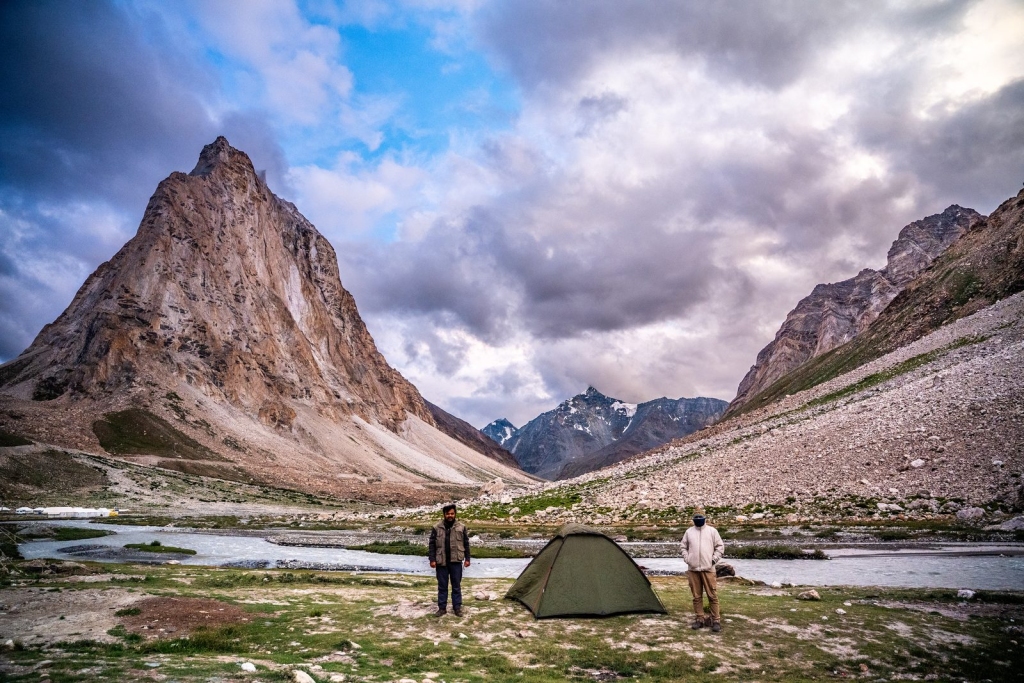
What struck me most about Pannu and Shubhu is how lightly they carry their life. Their first trip, to Rajasthan, didn’t go well — it had to be cut short after a few days in Ajmer and Jaipur. They didn’t drag that disappointment along. They learned, read the comments people left on their YouTube channel, prepared better, and set off again — about 25 days through Himachal, from Dharamshala all the way to Nako, and now Ladakh.
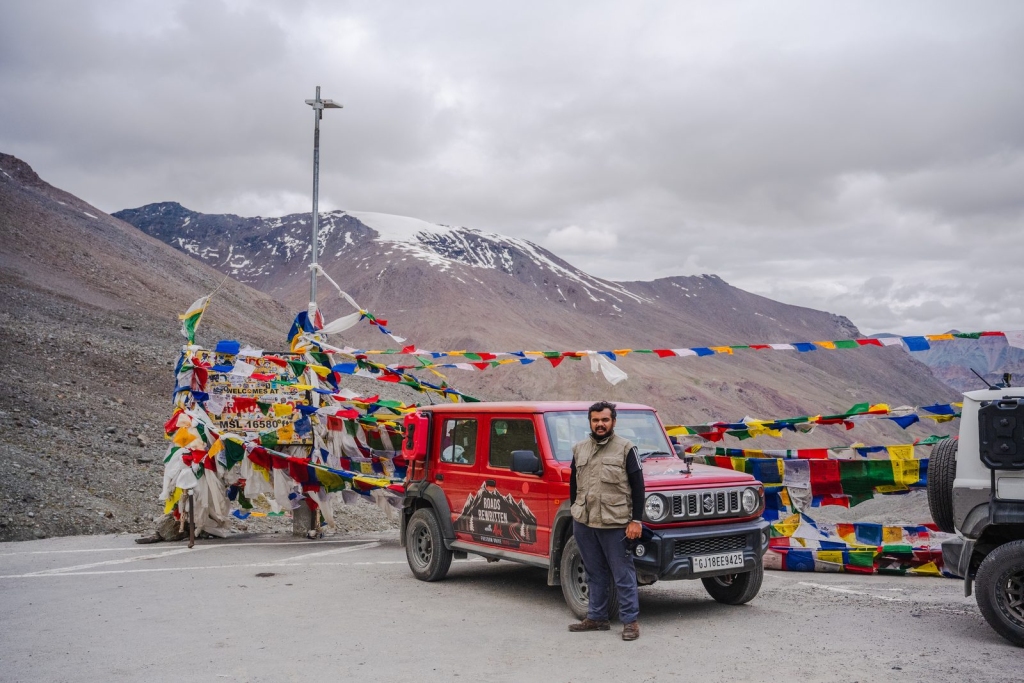
In Nako they cooked proper roti, sabzi and rice at minus twelve degrees. They camped at Prashar Lake. At Bir, the paragliding town, they stayed one night and didn’t want to leave. At Umling La, the world’s highest motorable road, they made coffee inside Kaira while snow fell outside. Near Siachen, at the board that reads “First View of Siachen Glacier”, they stopped and made pasta.
Life in a van, they told me, is never the same two days in a row. Some days you eat like royalty; some days you may have to sleep on an almost empty stomach, because you don’t know where tonight will be. Maggi is kept as the very last option, cup noodles for emergencies — and whatever they cook, they simply give it the name of the dish they were craving. I laughed, but there is real wisdom in that. You make the best of what this day gives you.
Plan for clarity, then let the road decide
Now, Shubhu is not a careless traveller. He prepares for a month before a trip — climate, roads, where to cook, where to camp — all in a Word sheet on his laptop. Before Ladakh he changed the brake pads because he knew there would be long downhills, and he says the van hasn’t cost him a single rupee in breakdown repairs since he started. Pannu gives him full credit: she admits she gets panicky, and he handles everything quietly.
But listen to how he sees planning: no plan ever works one hundred percent; a plan only gives your mind clarity. That is the balance I loved. Prepare well, yes — but don’t live inside the plan, and don’t postpone living until the plan is perfect. As I joked to my viewers, travel like them and you’ll face fewer challenges; travel like me and you’ll collect a lot more stories. Both, I think, are fine — as long as you actually go.
The Umling La climb tested all of this. Kaira is a heavy vehicle on one of the toughest roads anywhere. The van stalled about five times; the clutch plate was smelling; Pannu was dizzy from low oxygen. Shubhu thought, abhi nahi toh phir kab? — I won’t be coming back here again. He took the van to a flatter patch, put it in first gear, held the momentum at 30–40 and didn’t stop until the top. His line from that day is one I’ll keep: the climb is the toughest, but the view from the top heals everything.
Khichdi, egg curry and the joy of this evening
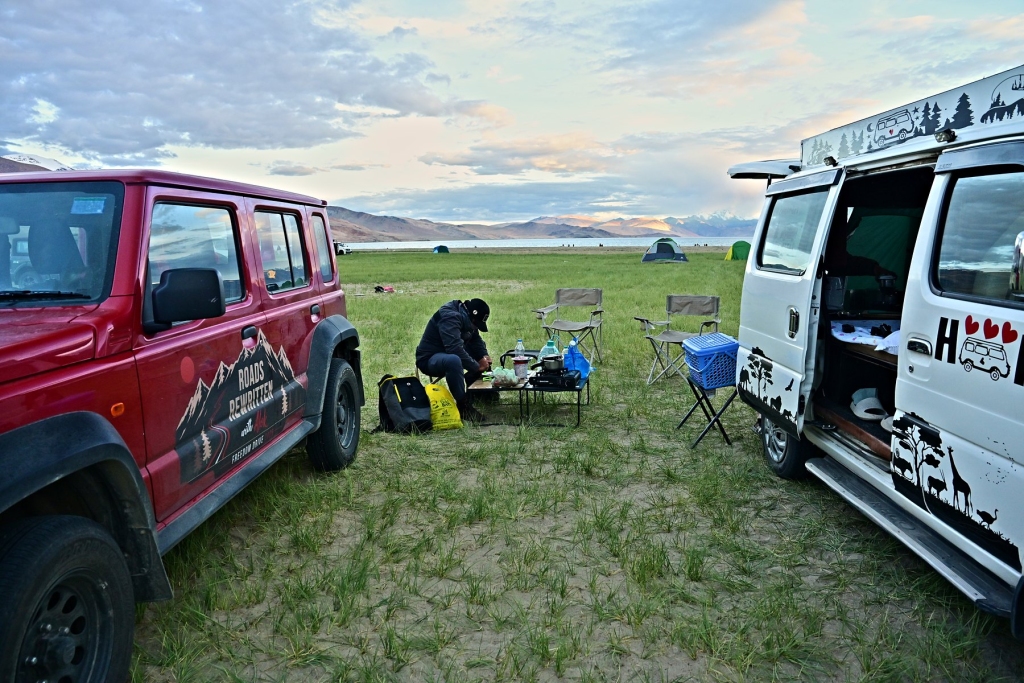
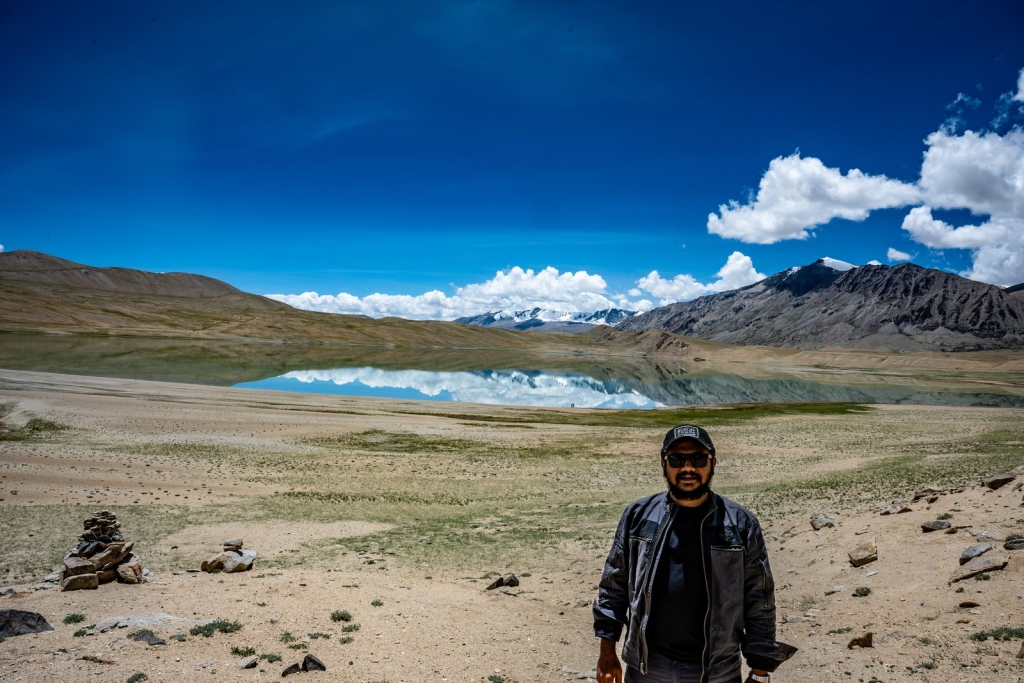
As the evening came in at Tso Moriri, the temperature around 10 degrees, we set up camp. Our tent went up, the kitchen came out of the car, and I took charge of a masaledar Gujarati vaghareli khichdi — onion, garlic, tomato, a proper tadka — while Pannu and Shubhu got their egg curry and rice going in Kaira’s kitchen. The cooker whistled beside the lake, and there couldn’t be anything better than that dinner.
Shubhu’s roadmap is to keep going until his retirement, and by April 2029 to have a bigger vehicle, circle all of India and then head out into the world. That is a dream for tomorrow. But sitting there, eating hot khichdi under the Changthang sky, I realised they aren’t waiting for 2029 to be happy. They are living it now, one day, one village, one meal at a time — without the baggage of yesterday’s failed trip, and without letting tomorrow’s plans steal today.
Quick facts
- Where: Tso Moriri lake and Korzok, Changthang, Ladakh — during the nomadic tribes’ festival
- Who: Pannu & Shubhu, van-life couple from Nagpur, Maharashtra (@PannuandShubhu on YouTube and Instagram)
- Their van: Kaira — bed, kitchen, portable toilet, blackout curtains; travelling continuously for about seven months
- Their routes so far: Rajasthan (Ajmer, Jaipur), Himachal (Dharamshala to Nako, ~25 days), Ladakh (Umling La, Hanle, Pangong, Siachen base camp, Thang village in Nubra)
- My ride: Suzuki Jimny 4×4 — this is Part 3 of my Leh–Ladakh 2026 series
- Tips from Shubhu: prepare a month ahead, service the vehicle for the terrain (brake pads before long descents), and on steep high passes keep your momentum in first gear
There is much more in the film — the van tour, the achievement board, Pannu’s honest answers and our lakeside dinner. Watch the full conversation on Roads Rewritten with Alok, subscribe to the channel, and do subscribe to Pannu & Shubhu too. And tell me in the comments: would you live in a van? Whatever your answer, don’t wait two years to do the thing your heart wants. Kar lo.