Every year, a few days before Navratri begins, the city changes its mood. Stalls spring up overnight, string lights come on, and the air fills with the smell of fresh fabric and the sound of bargaining. This year I walked through one of these Navratri markets at night with my camera, and I came away with two things: a lot of colour, and a lot of questions I wanted to answer properly. Why do we celebrate these nine nights? Who are the nine forms of Maa Durga? And what, really, is the difference between Garba and Raas?
Before the first night: the market
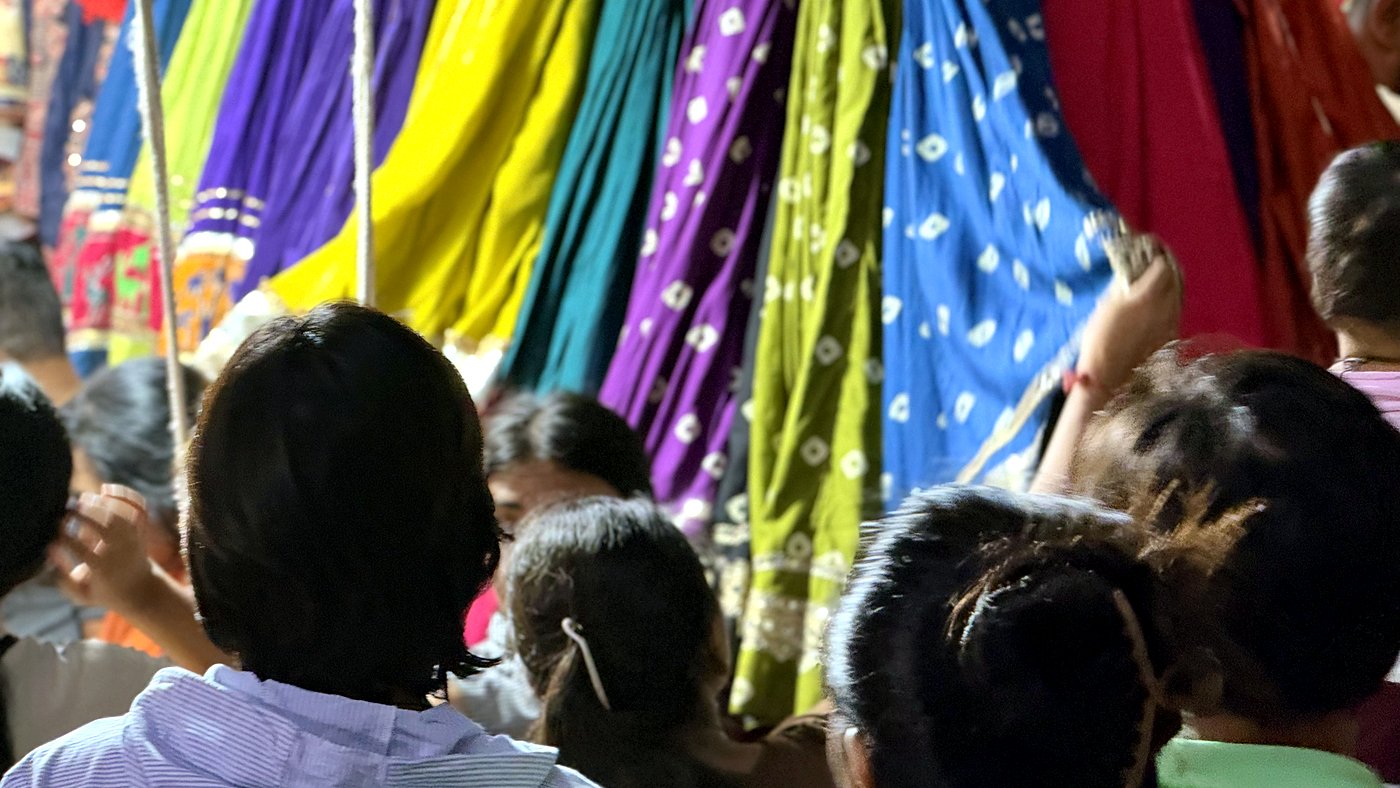
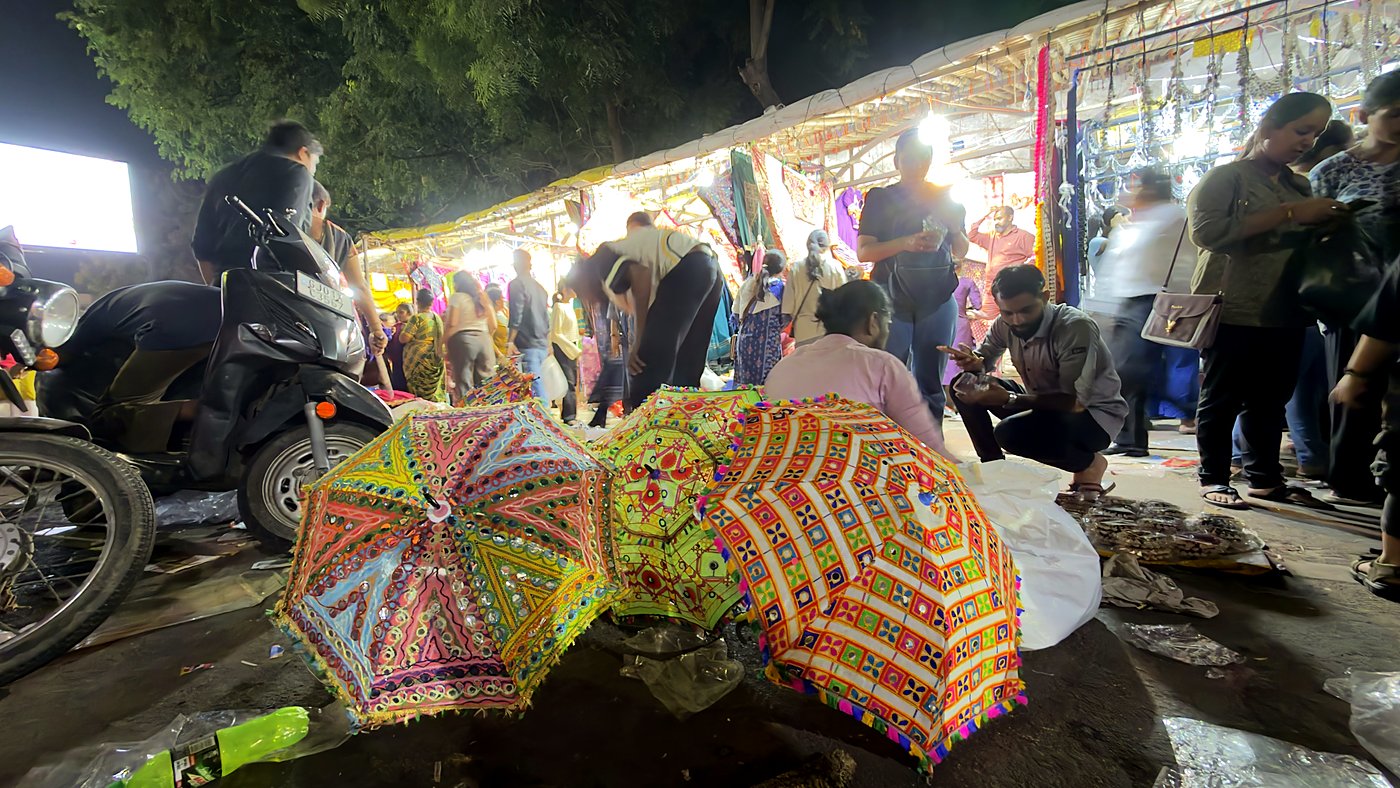
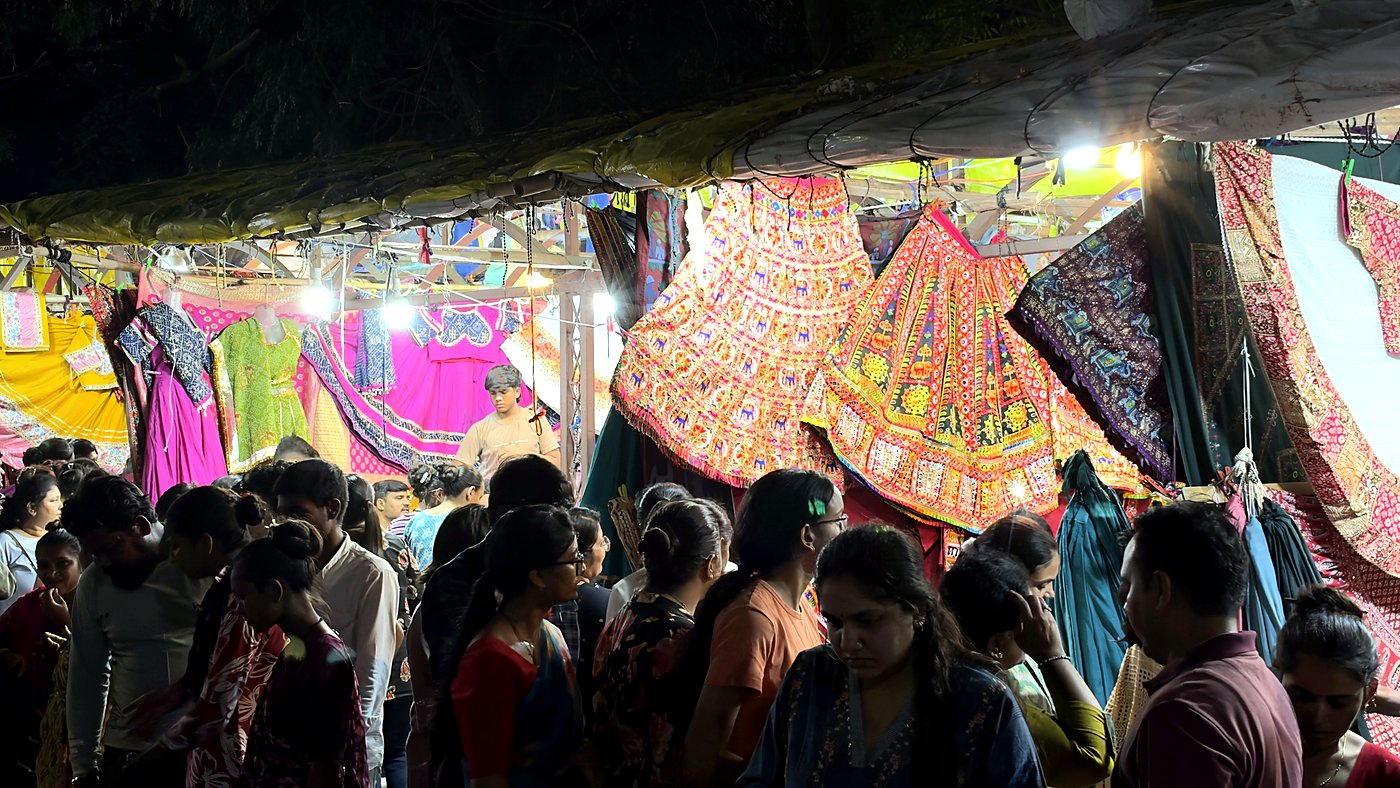
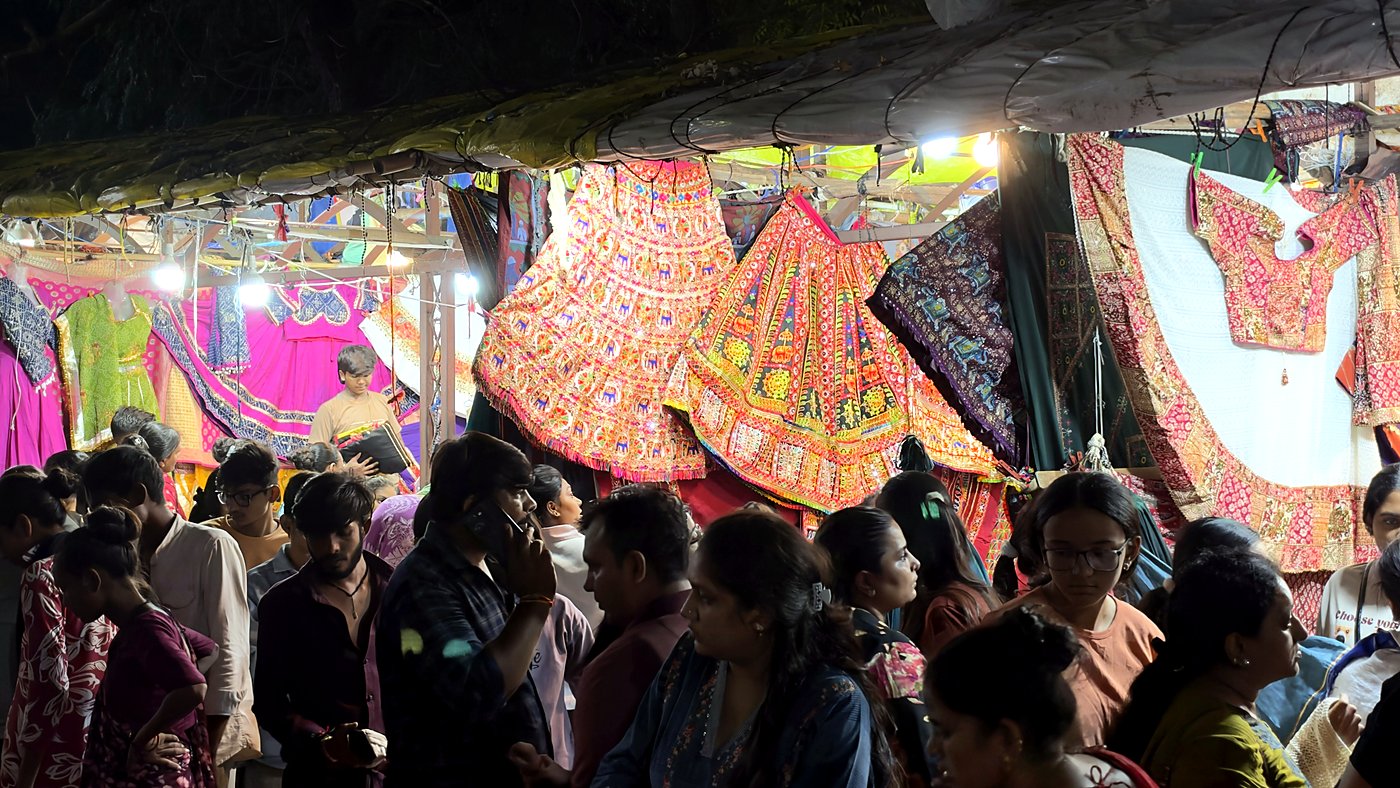
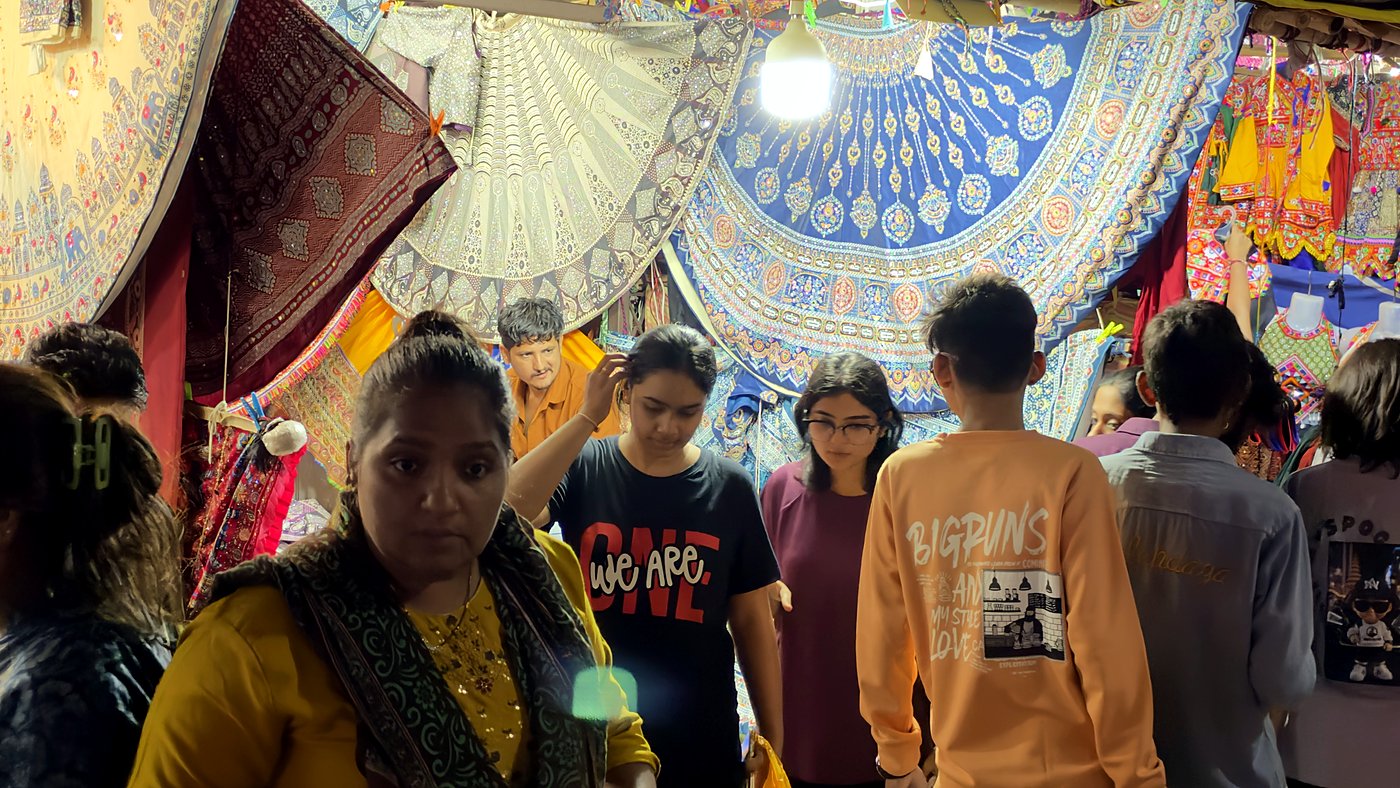
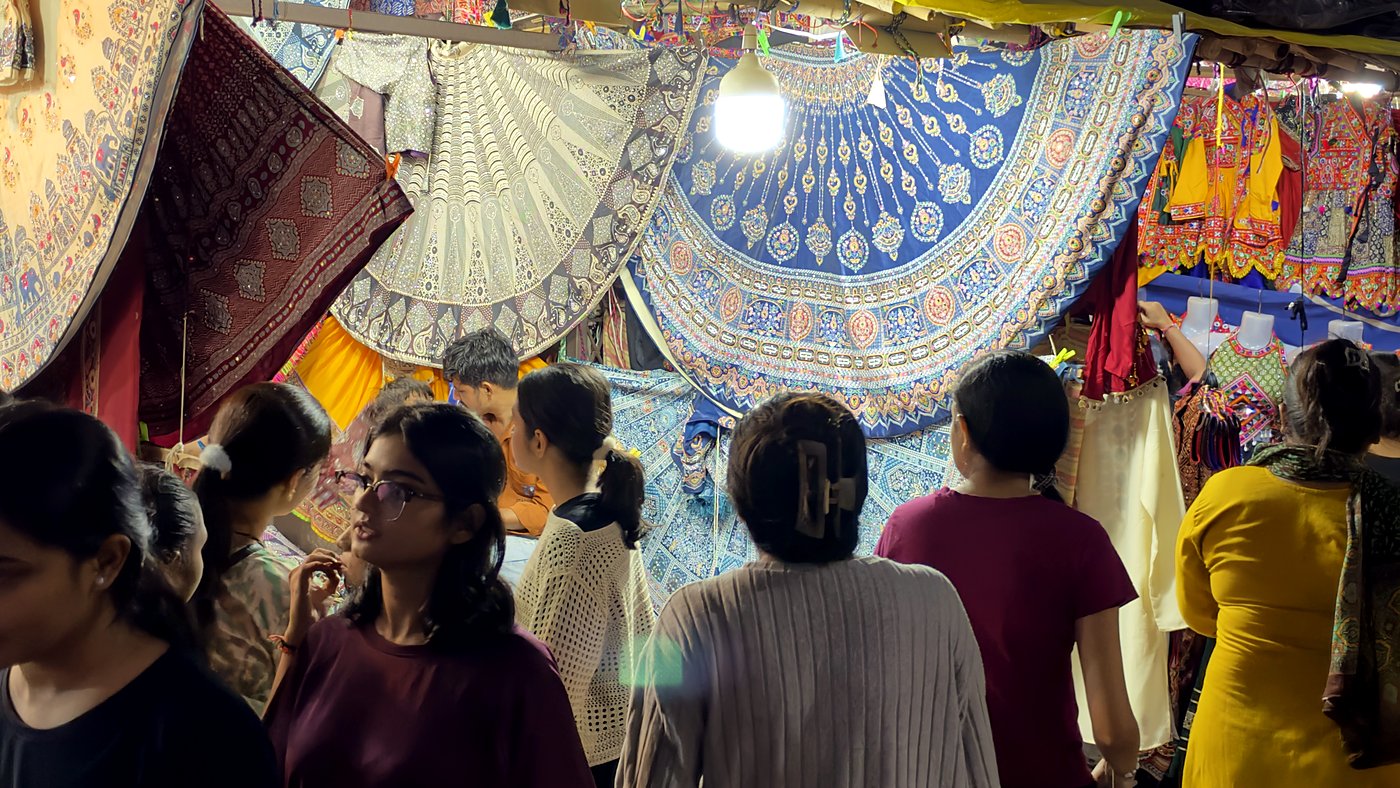
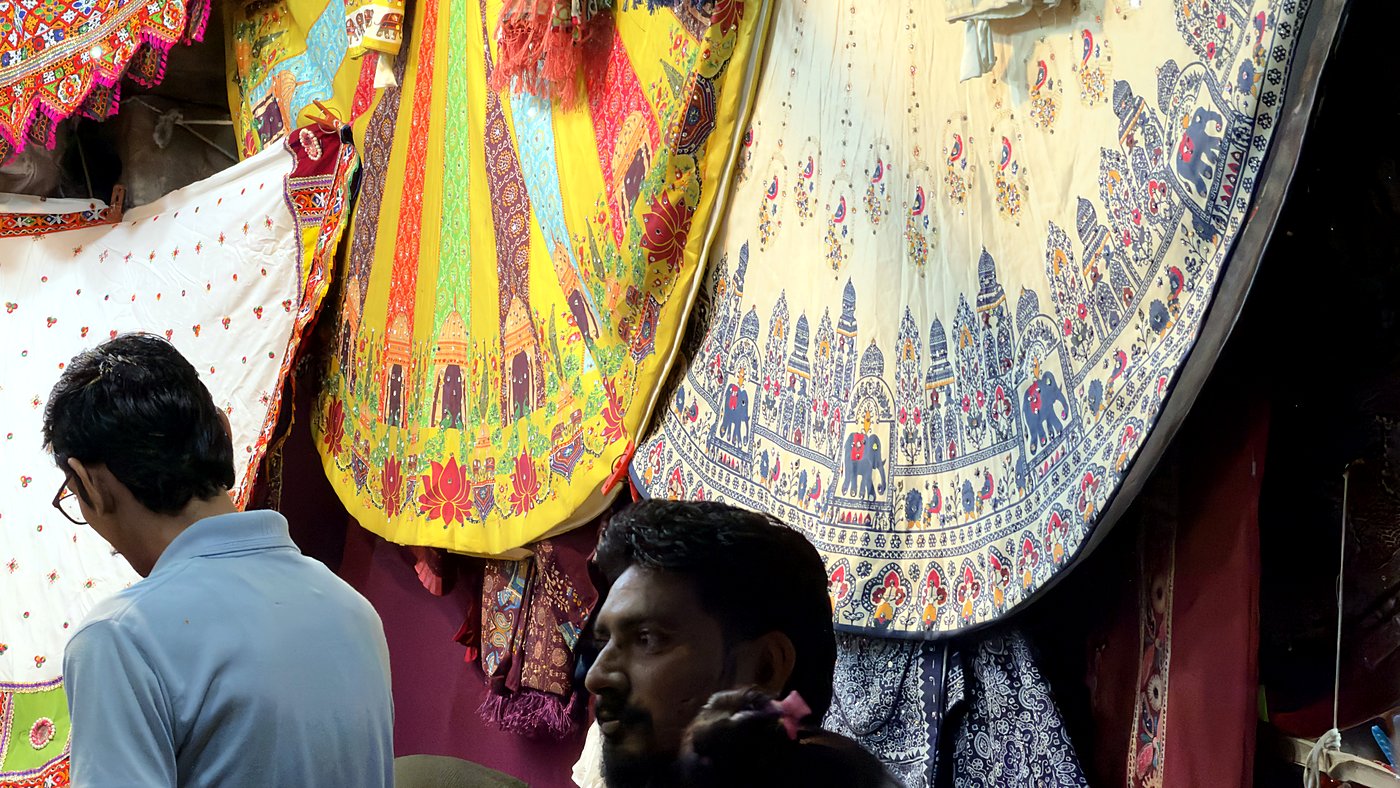
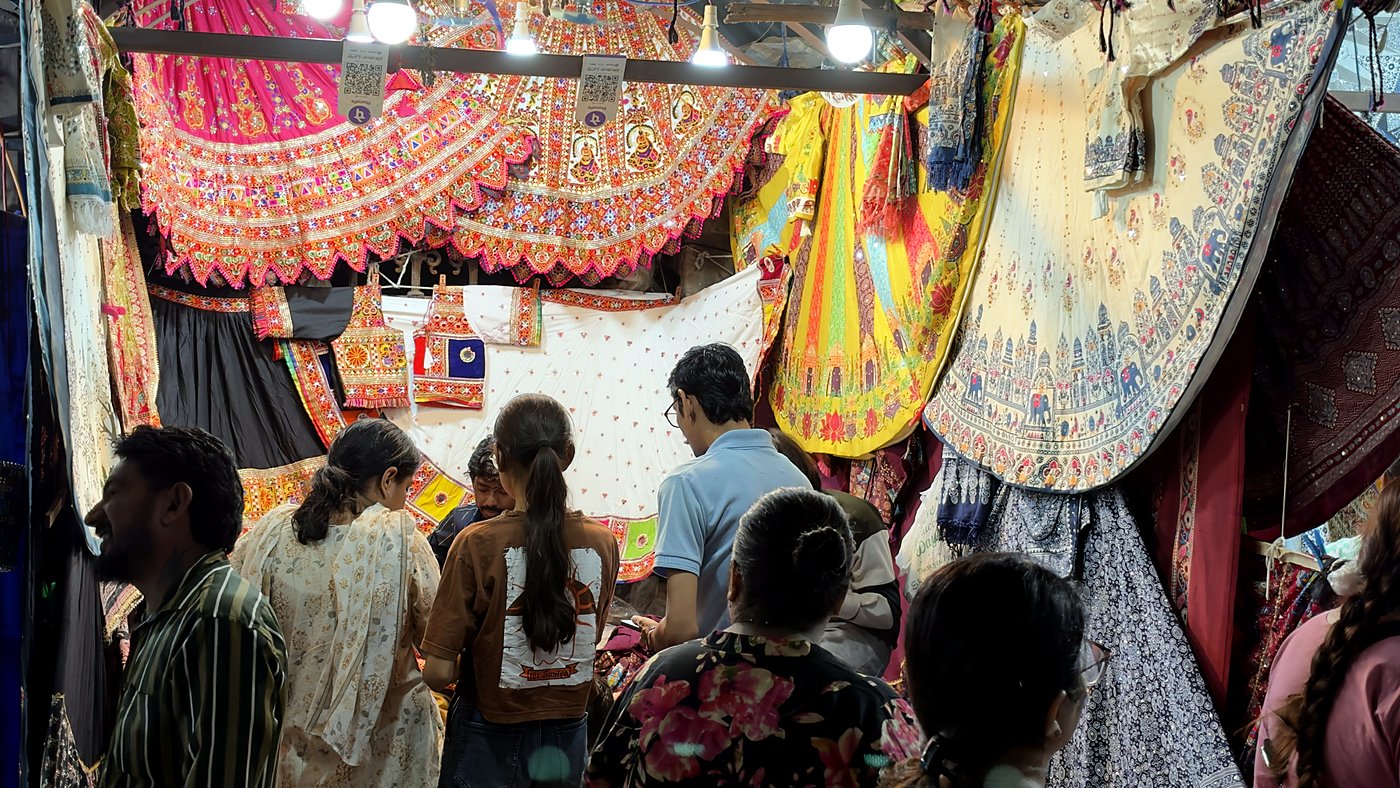
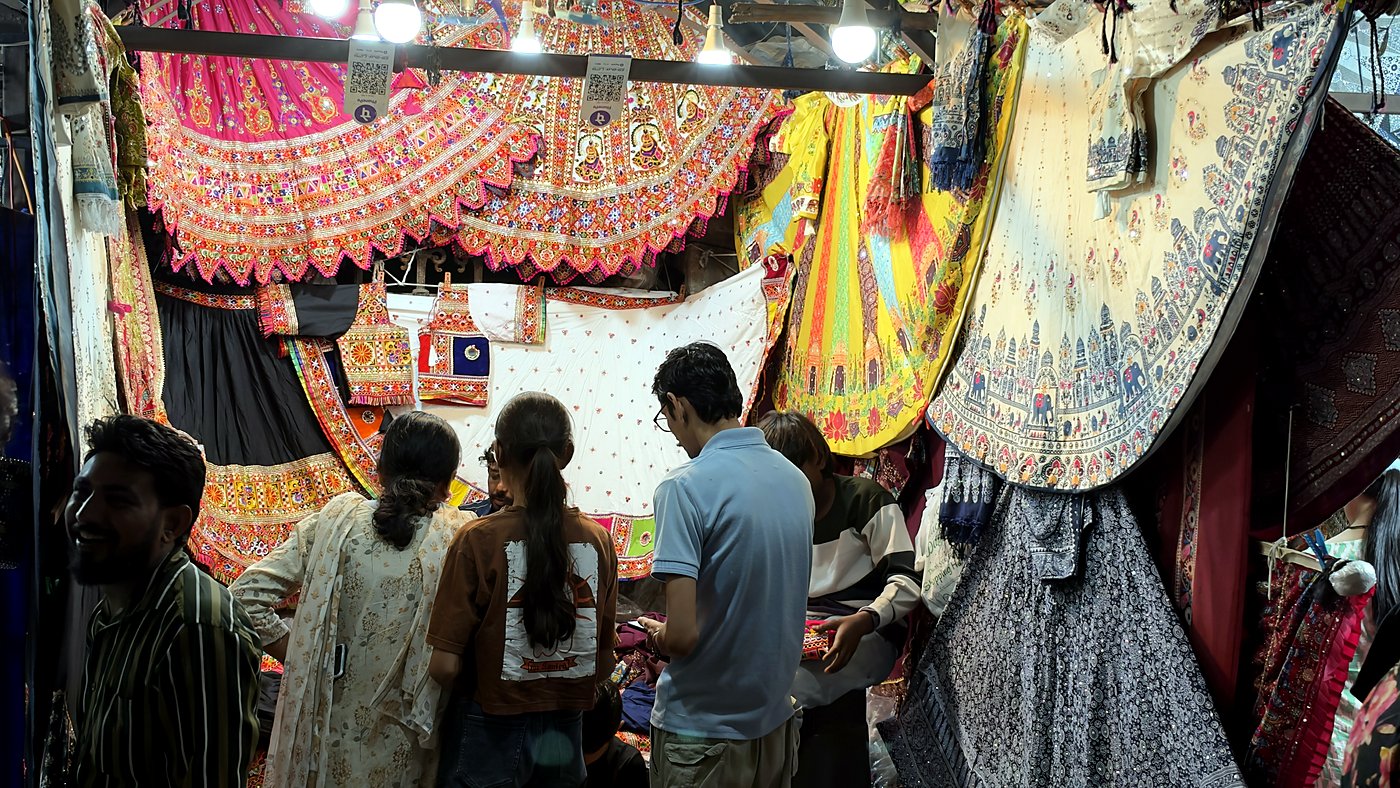
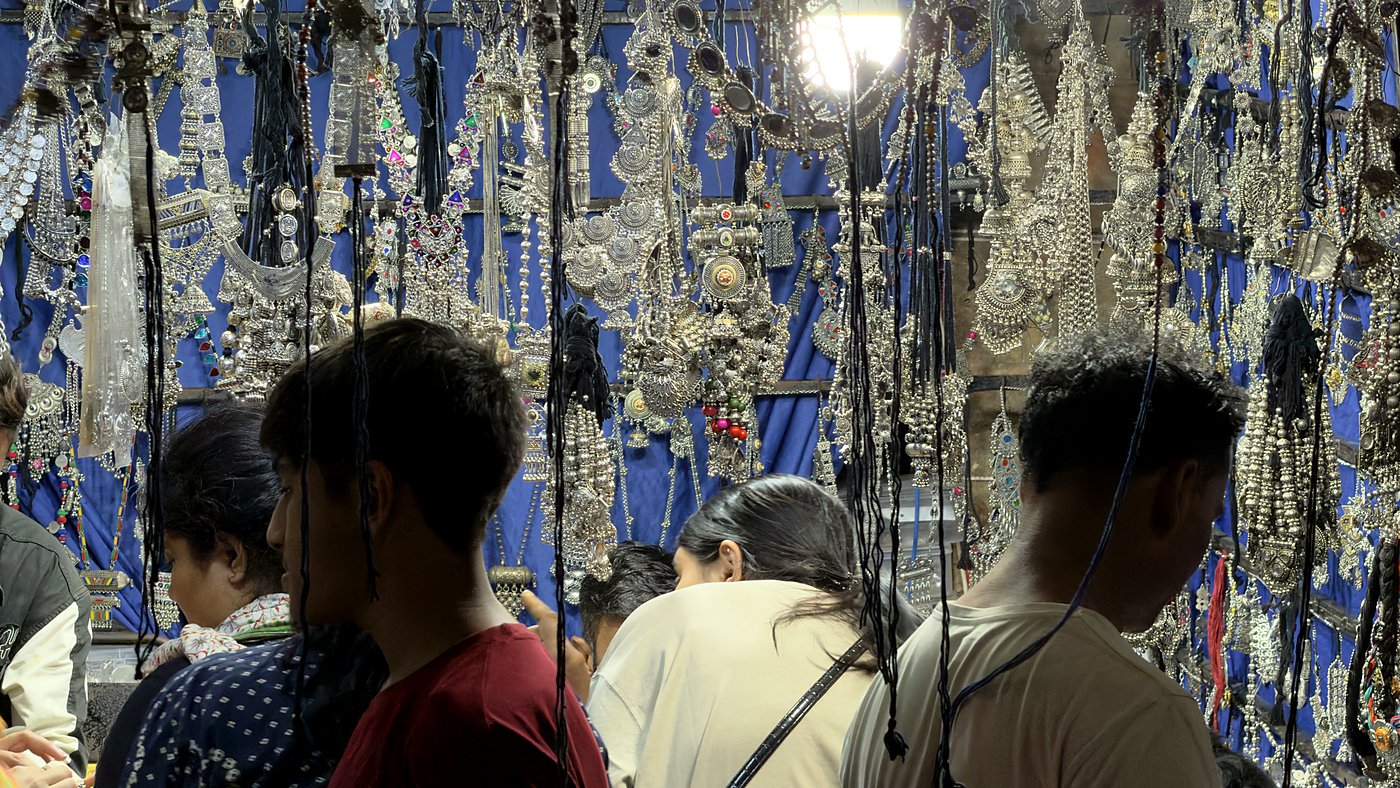
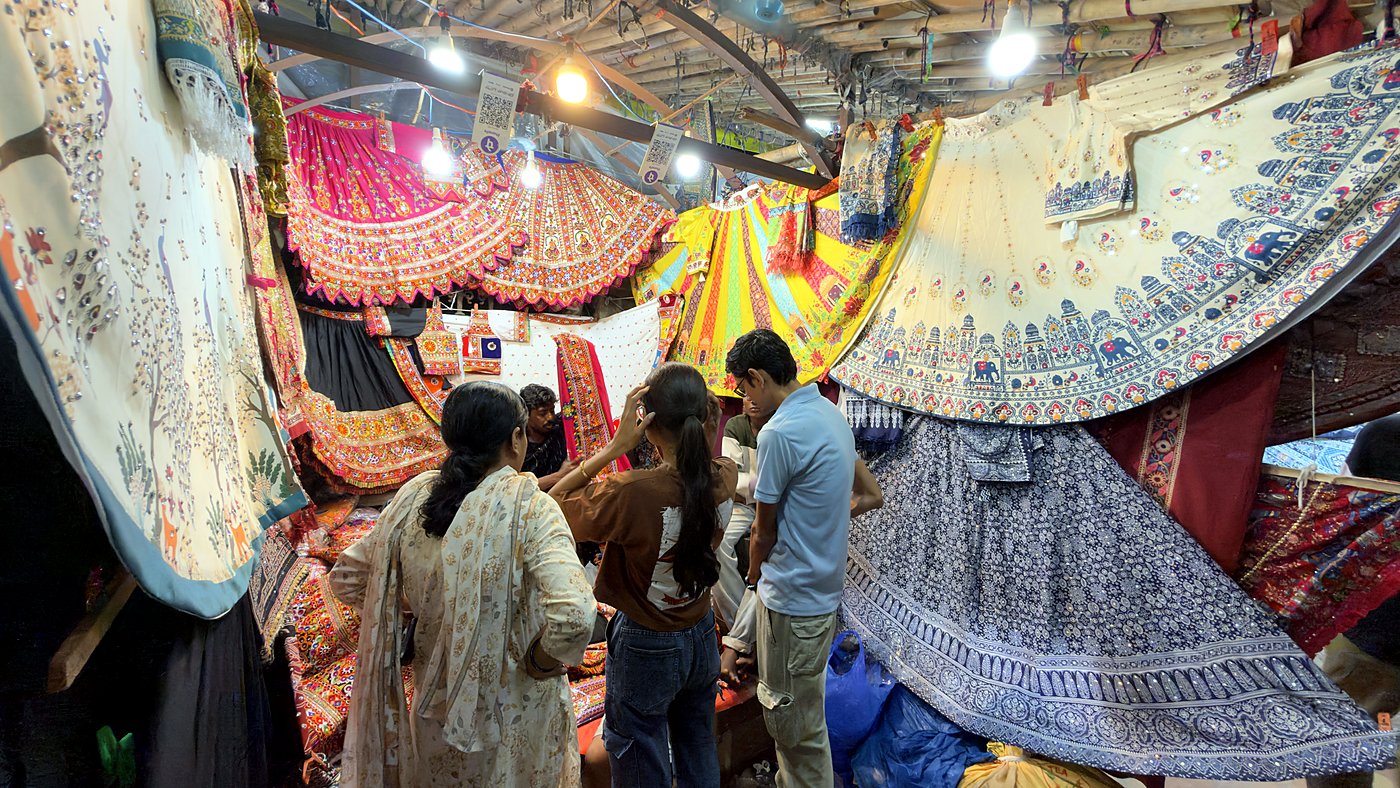
Long before anyone dances, Navratri starts here. Chaniya cholis in every shade hang from the beams, heavy with mirror work and embroidery. Silver jewellery glints under bare bulbs. Bright embroidered umbrellas are piled up on the ground, waiting to become part of someone’s outfit. And in the middle of it all, families, friends and groups of college students squeeze through the lanes, holding a fabric up to the light and deciding which colour will carry them through nine nights of dancing.
Why do we celebrate Navratri?
The story most of us grow up with is that of Mahishasura, a powerful demon who could not be defeated by any one god. The gods combined their energies, and from that combined force Maa Durga appeared. For nine nights and days she fought him, and on the tenth day she won. That day is Vijayadashami, or Dussehra. Navratri, literally “nine nights”, is the time we dedicate to her and to the idea that good prevails over evil.
There is a quieter reason too. Navratri comes at the turn of the season, when the monsoon withdraws and the air starts to cool. Fasting, prayer and late-night celebration have long marked that change in many parts of India.
The nine forms of Maa Durga: what each day means
Each of the nine nights is dedicated to a different form of the Goddess, collectively called Navadurga. Here is what each one stands for.
- Day 1: Shailaputri. The “daughter of the mountain”, born to Himavan, the Himalaya. She rides a bull and carries a trident and a lotus. She stands for stability and the strength of a good beginning.
- Day 2: Brahmacharini. The form of penance and discipline, with a rosary in one hand and a water pot in the other. She teaches patience and steady effort.
- Day 3: Chandraghanta. She wears a crescent moon shaped like a bell on her forehead and rides a lion. It is said that the sound of her bell drives away fear.
- Day 4: Kushmanda. Believed to have created the universe with her gentle smile. She represents energy, warmth and creation.
- Day 5: Skandamata. The mother of Skanda, also known as Kartikeya, shown with the child on her lap. She is the face of motherly love.
- Day 6: Katyayani. Born as the daughter of the sage Katyayana. This is the warrior form associated with the defeat of Mahishasura, and she represents courage.
- Day 7: Kalaratri. The fiercest form, dark and wild-haired, yet kind to her devotees. She stands for the destruction of darkness and ignorance.
- Day 8: Mahagauri. Radiant and serene, said to have turned fair after long penance. She stands for purity, calm and forgiveness.
- Day 9: Siddhidatri. Seated on a lotus, the giver of siddhis, or spiritual accomplishments. The nine-day journey comes to its fulfilment with her.
Traditions and local customs differ in the details, but the arc is clear: it begins with grounding, passes through discipline, courage and fierce transformation, and ends in peace and fulfilment.
What is Garba?
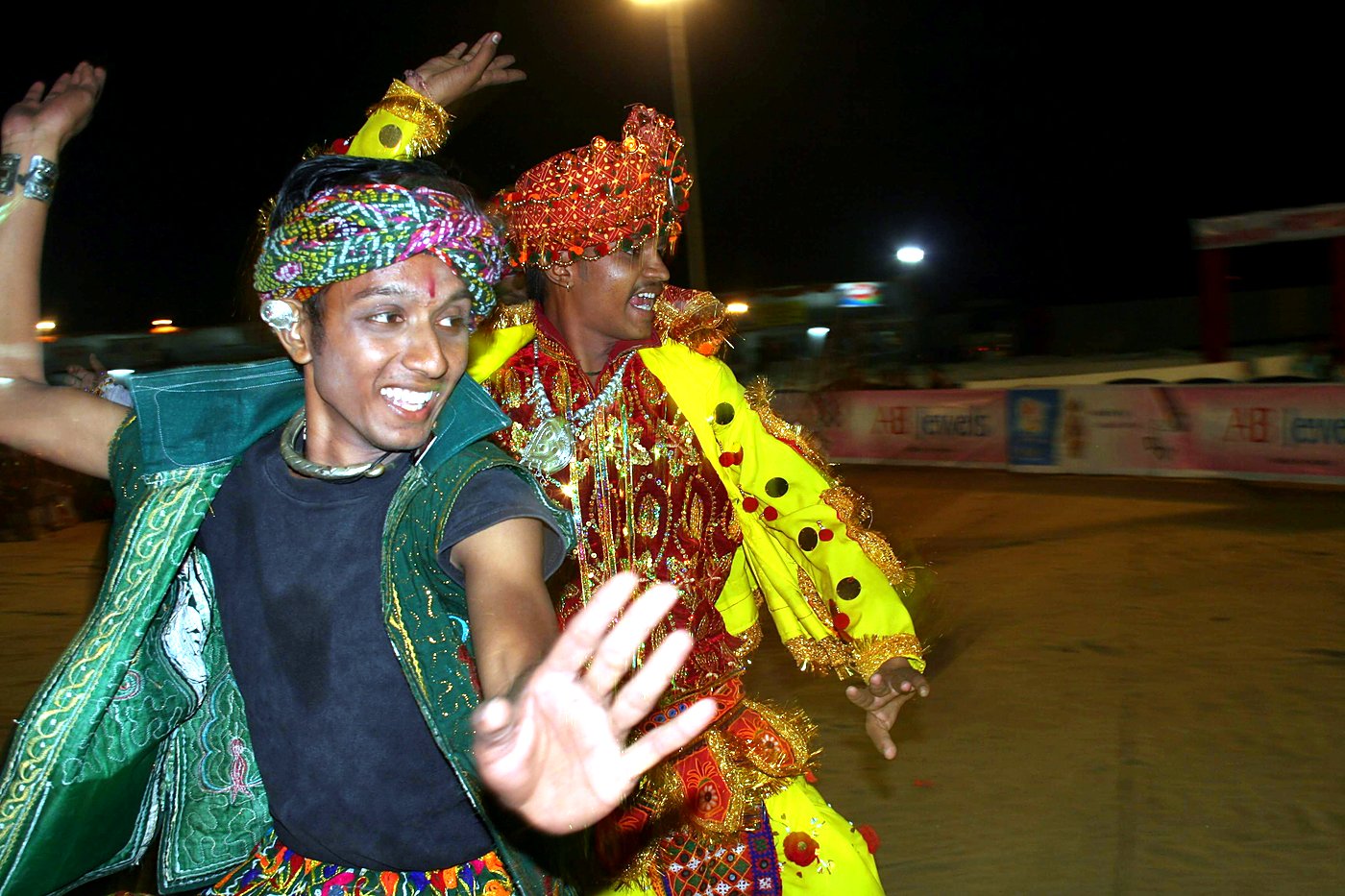
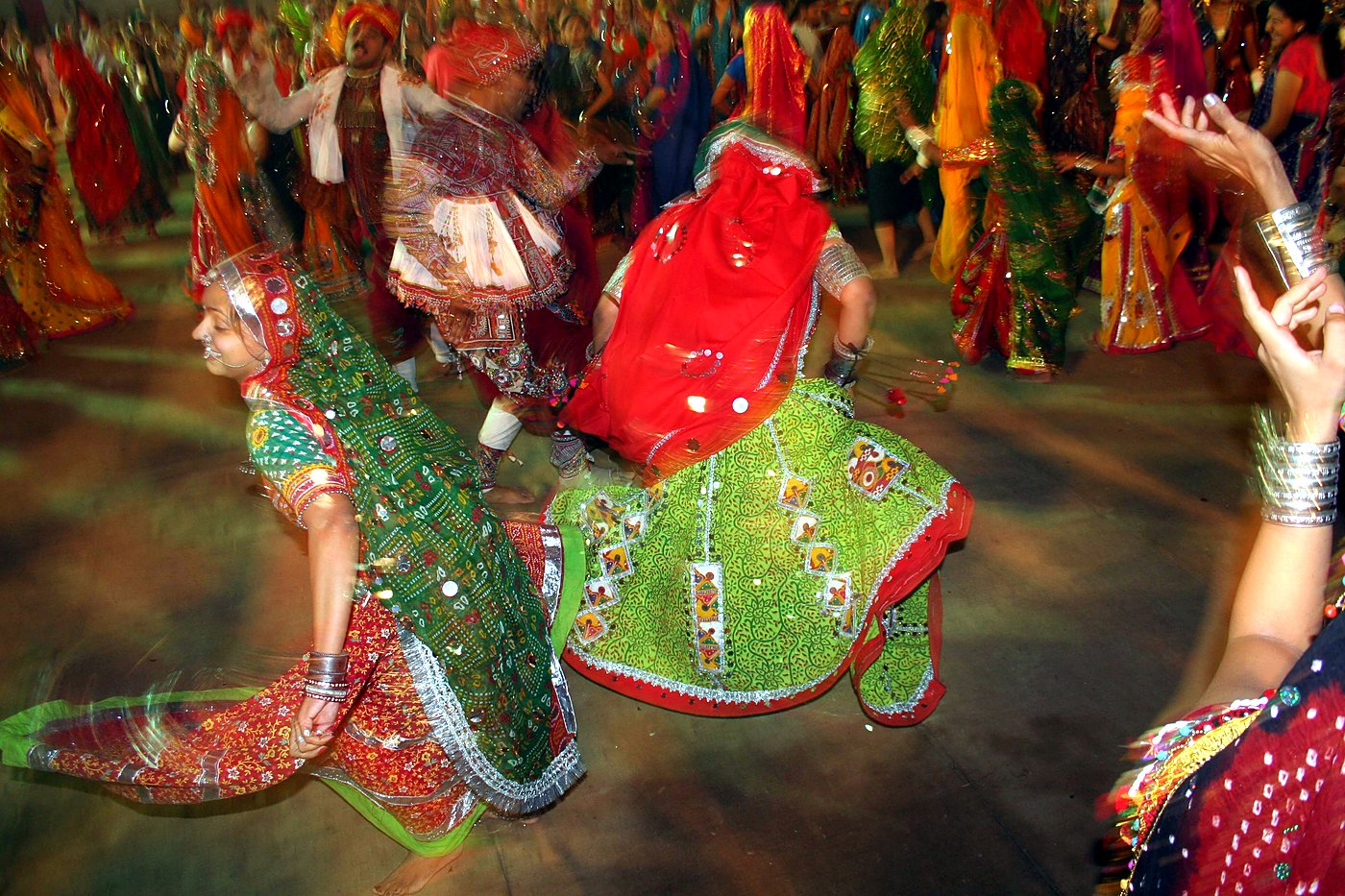
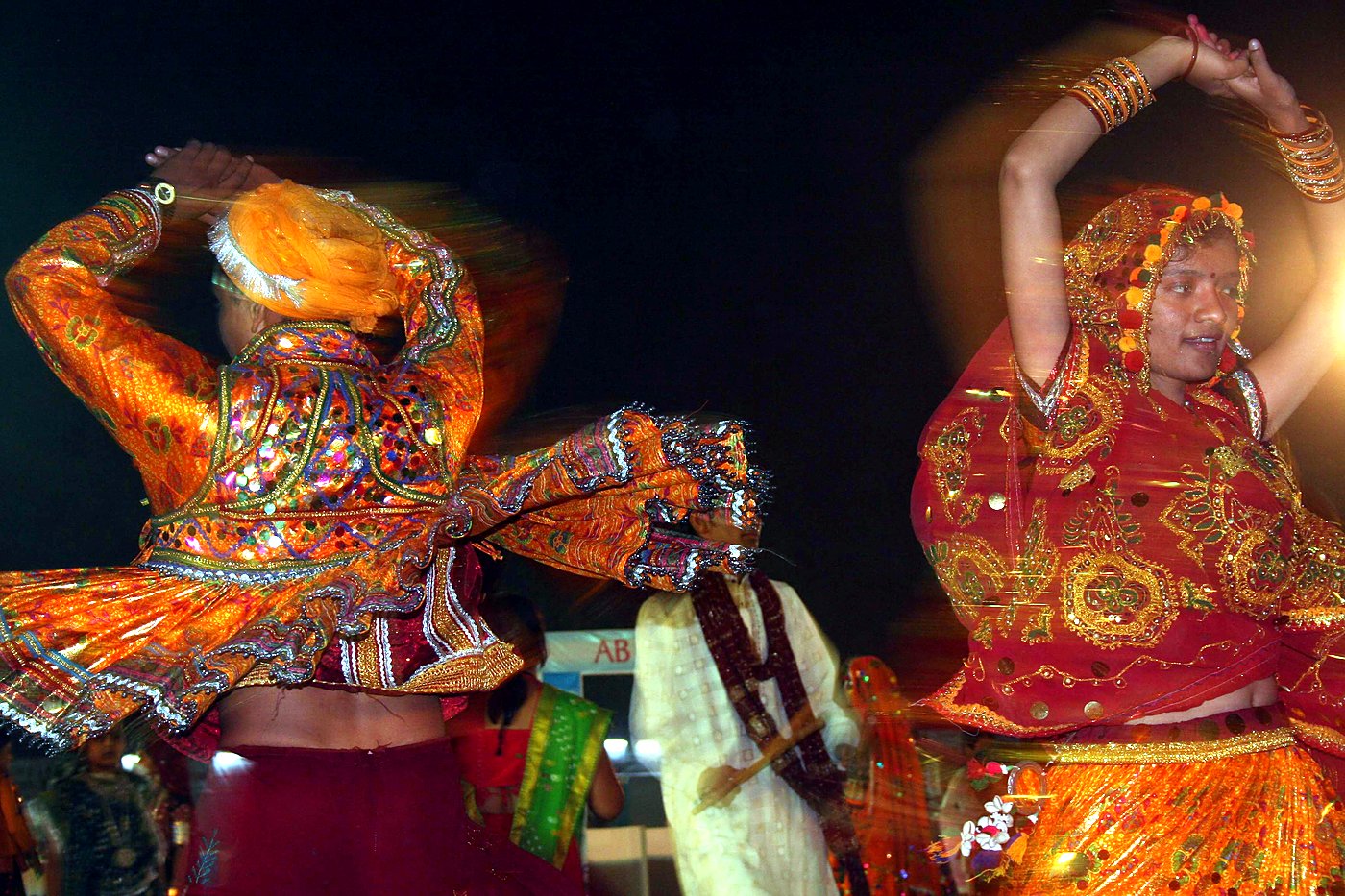
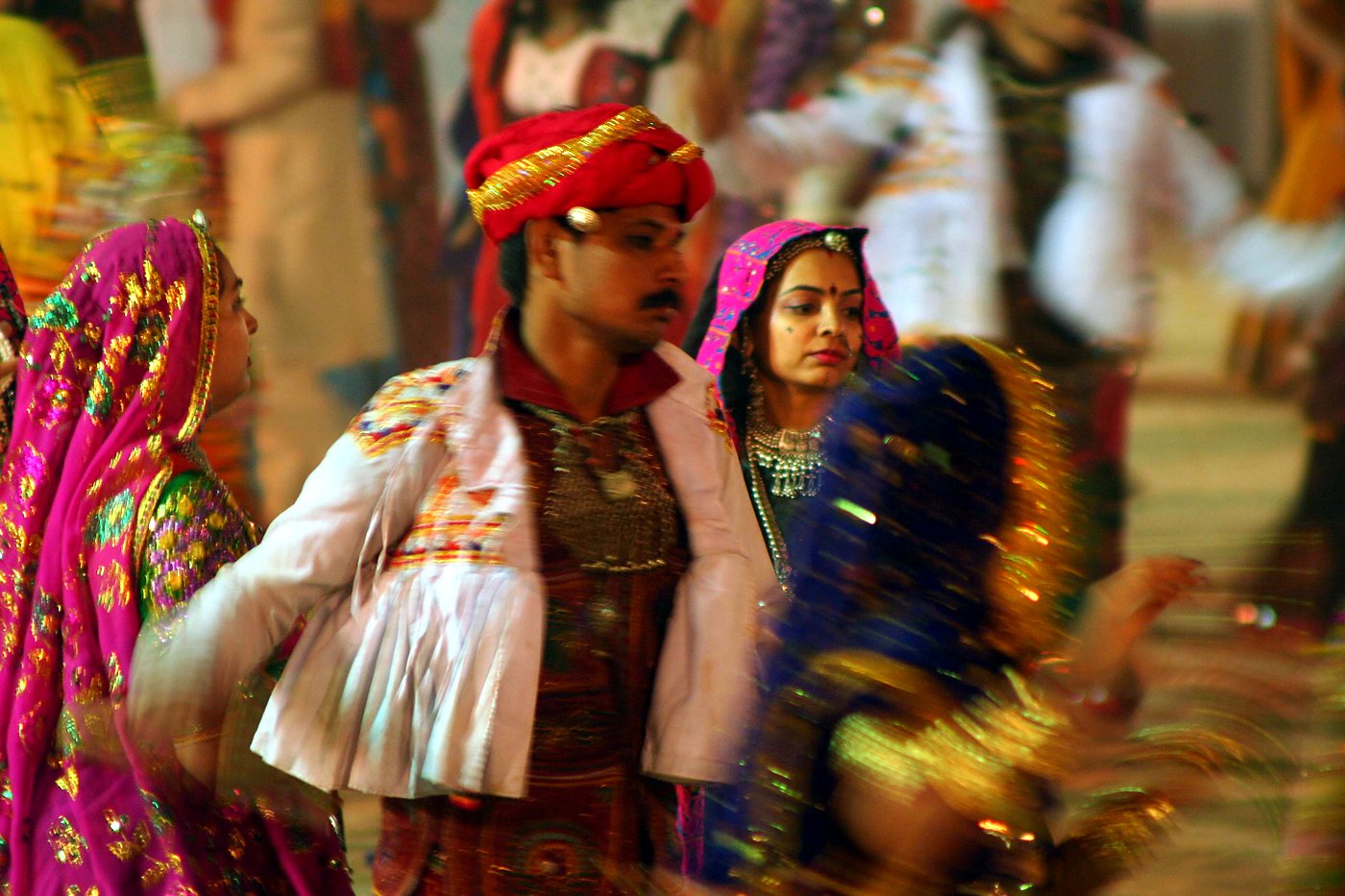
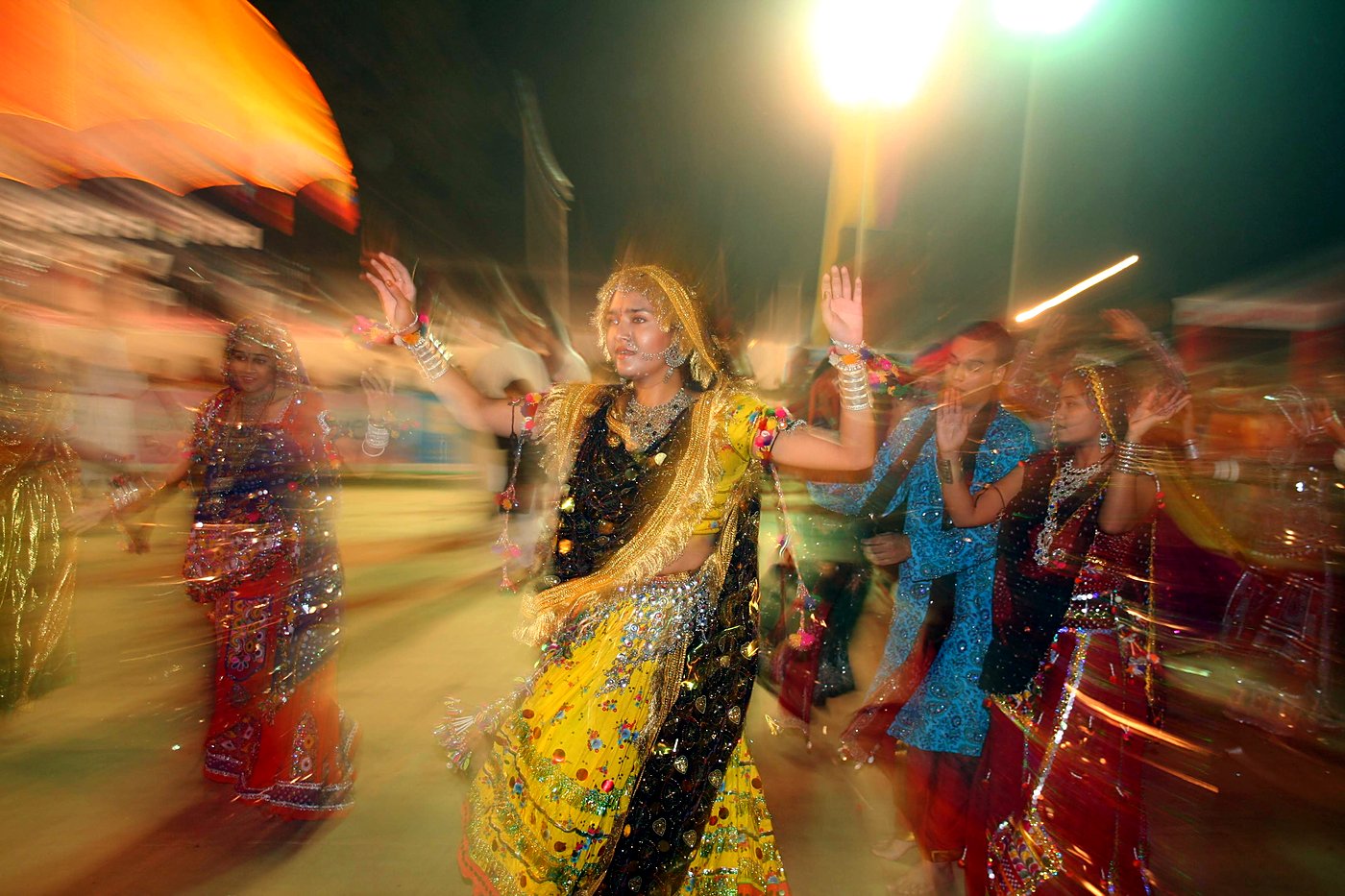
Garba is the heartbeat of Navratri in Gujarat. The word is linked to garbha, the womb, and to the garbha deep, the lamp lit inside an earthen pot. Dancers form concentric circles around that lamp or an image of the Goddess, moving in rhythm with claps. The circle is the point: it reminds us that life, time and the seasons keep coming back to where they started, with the Goddess at the centre.
What is Raas, and how is it different?
Raas, usually seen as Dandiya Raas, is a related but different form. Dancers hold a pair of sticks, move in pairs or lines, and strike the sticks together to a faster beat. Some traditions link it to the Raas of Krishna and the gopis, and others see the sticks as the Goddess’s swords and the dance as the battle with Mahishasura.
- Garba: mostly clapping, circular, slower and devotional, with the Goddess or her lamp at the centre.
- Raas (Dandiya): sticks, pairs, a quicker tempo, and a playful, energetic mood.
In many places both happen on the same night. The evening usually begins with Garba and moves on to Dandiya.
Why do people sing while they play Garba?
Garba is not only danced, it is sung. The songs are in praise of the Goddess and tell her stories, so the dance becomes a form of prayer. The singing also sets the rhythm: when a crowd claps together to the same beat, hundreds of people move in step without anyone leading them. And these songs travel through families, so the song a grandmother sings is often the one her granddaughter sings. Generations change, the songs stay.
The nicest thing about a Garba circle is that no one stands ahead of anyone else. Everyone is part of the same ring.
A closing thought
Navratri asks for nine nights, and in return it gives colour, music, food and a sense of belonging that is hard to find in the rest of the year. Whether you come for the prayer, the dance or the shopping, the circle has room for you.
The market photographs were taken this Navratri (2026). The Garba photographs are from my archive of earlier years. Wishing you a joyful Navratri.