Some trips are about the places you go. This one was about the person in the back seat.
A few Sundays ago I woke my son Aaroh before the sun, wrapped him in his blanket and carried him to the car. We were driving to Dharoi Lake in north Gujarat to look for birds. There was no itinerary, no checklist and no phone in his hands. Just a pair of binoculars, a camp stove, a packet of Maggi and one long day together.
Why I took him
I have spent more than seventeen years in communication, and if the work has taught me one thing, it is that attention is the most valuable thing we can give anyone. Clients want it. Audiences want it. Children want it most of all, and they can tell instantly when they are getting only half.
At home, half is what I often give. There is always one more mail, one more edit, one more notification. So I wanted a day where nothing could compete with him. Bird watching was the perfect excuse, because birds do not wait for you to finish your call. If you look away, you miss them. That rule applied to both of us.
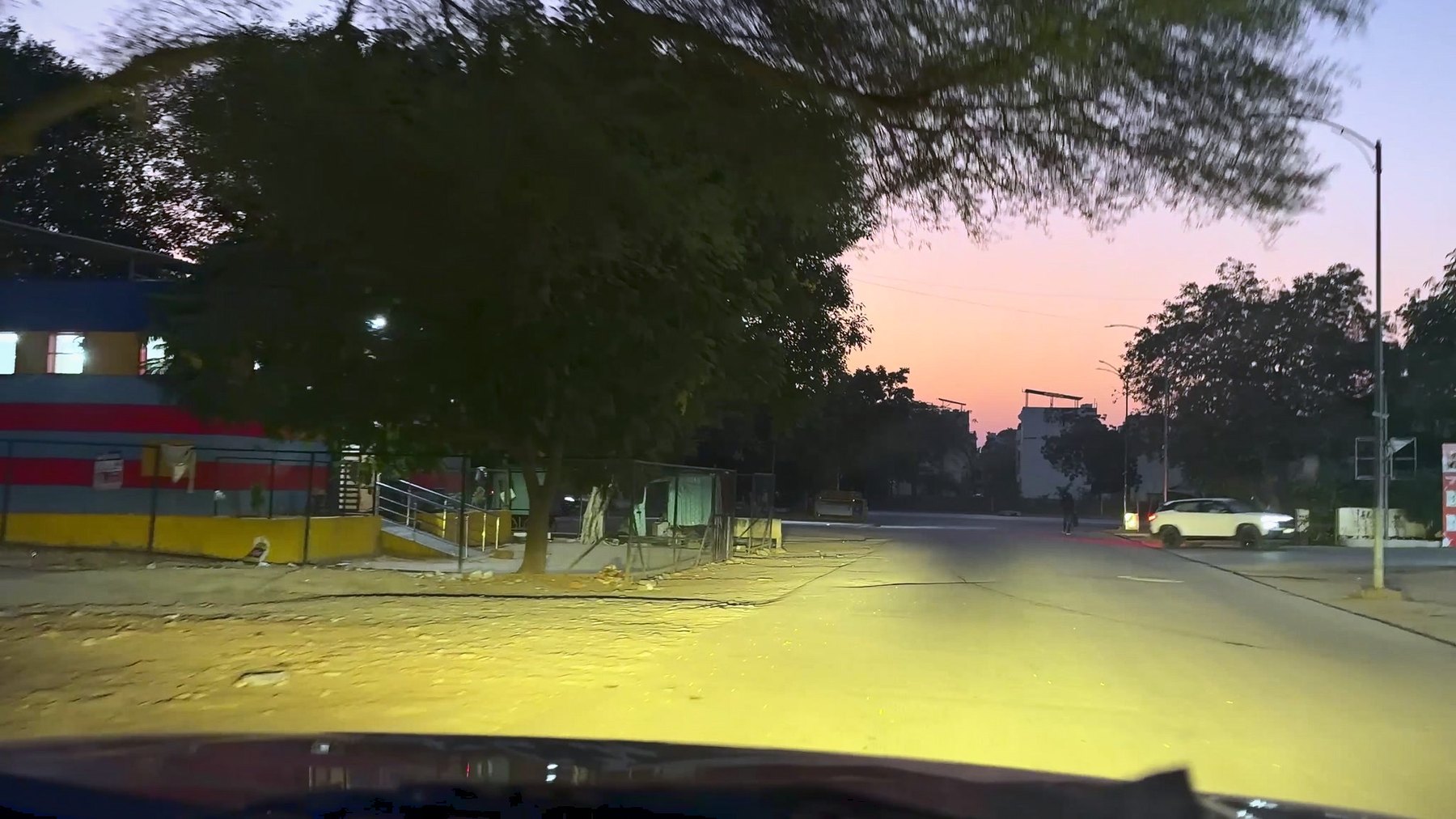
The drive is part of the lesson
Aaroh slept through the first hour, curled under his blanket while the headlights pushed a yellow tunnel through the dark. I drove and watched the sky turn from navy to orange. Those quiet minutes, with my child asleep and safe behind me, are some of the most peaceful a parent gets.
When he woke up, the questions started, and they did not stop. How far is it? Which bird is the biggest? Why do they stand on one leg? In the city I sometimes answer questions like these with one eye on a screen. In the car there was nothing else to do but answer properly, or better still, say “I don’t know, let’s find out when we get there.” That sentence is underrated. It tells a child that not knowing is the beginning of something, not a failure.
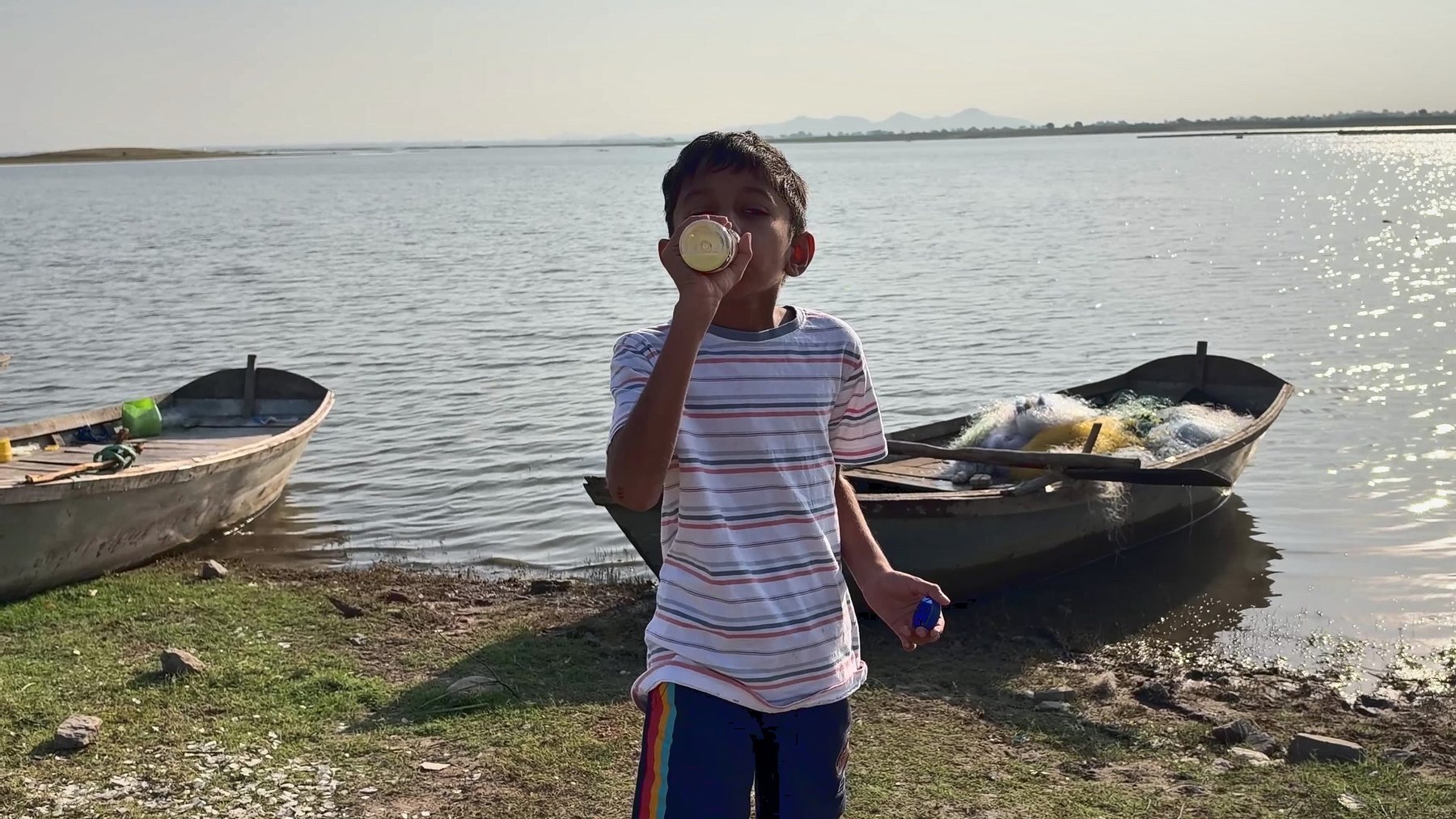
Handing over the binoculars
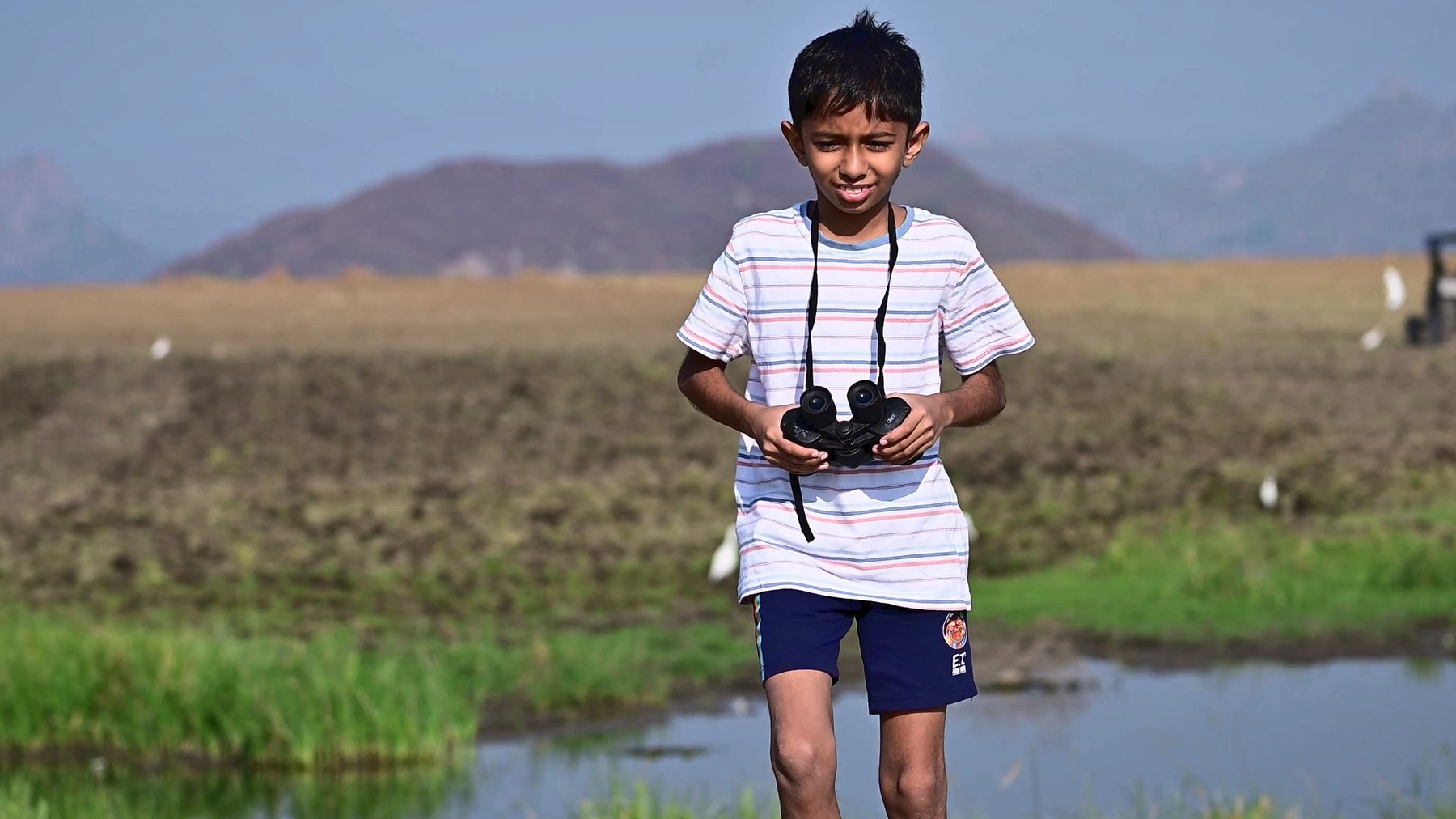
At the lake I did something that is harder for a parent than it sounds. I gave Aaroh the binoculars and stepped back.
My instinct was to point, to explain, to show him where to look. I held it in. For a few minutes he swung the binoculars everywhere, saw nothing but blur and grumbled. Then he slowed down. He learned, on his own, that you find a bird with your eyes first and only then lift the glasses. He learned to hold his breath when he moved. Nobody taught him that. The birds did.
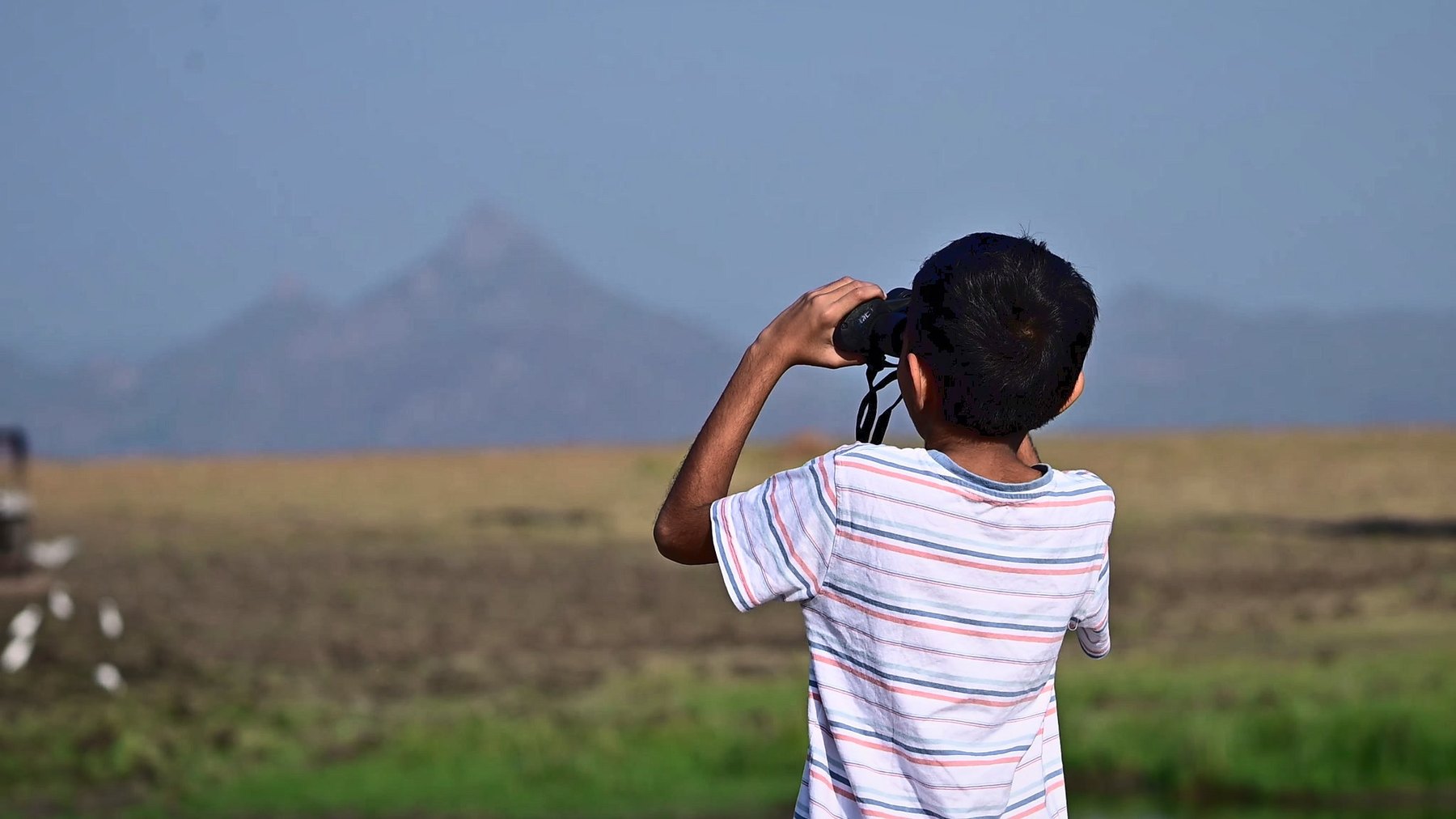
This is the part of the day I keep coming back to. We spend so much energy giving children answers. Sometimes the bigger gift is a problem worth solving and the time to solve it. Patience cannot be lectured into a child. It can only be practised, and nature is the most forgiving place to practise it.
What we saw at Dharoi Lake
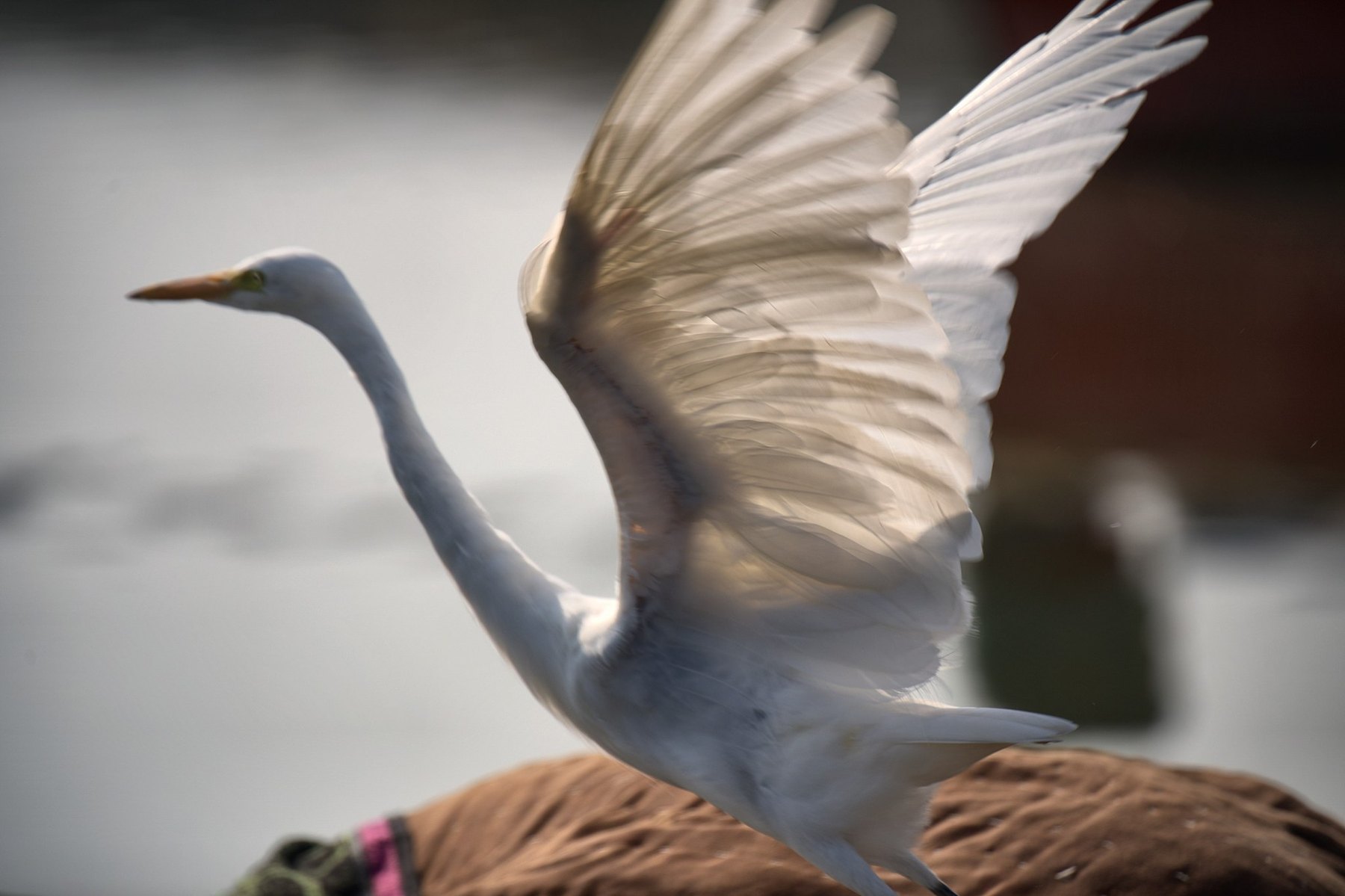
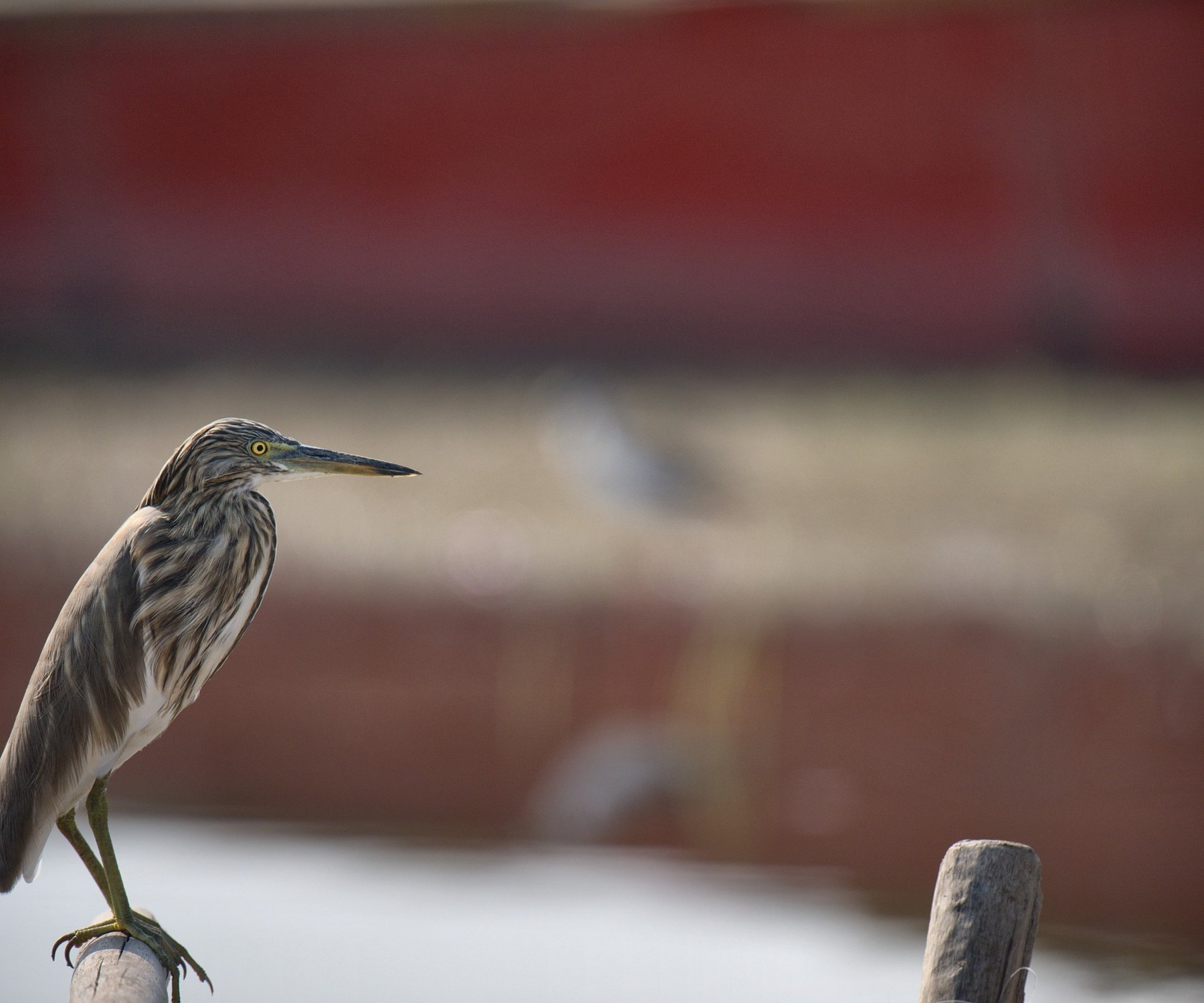
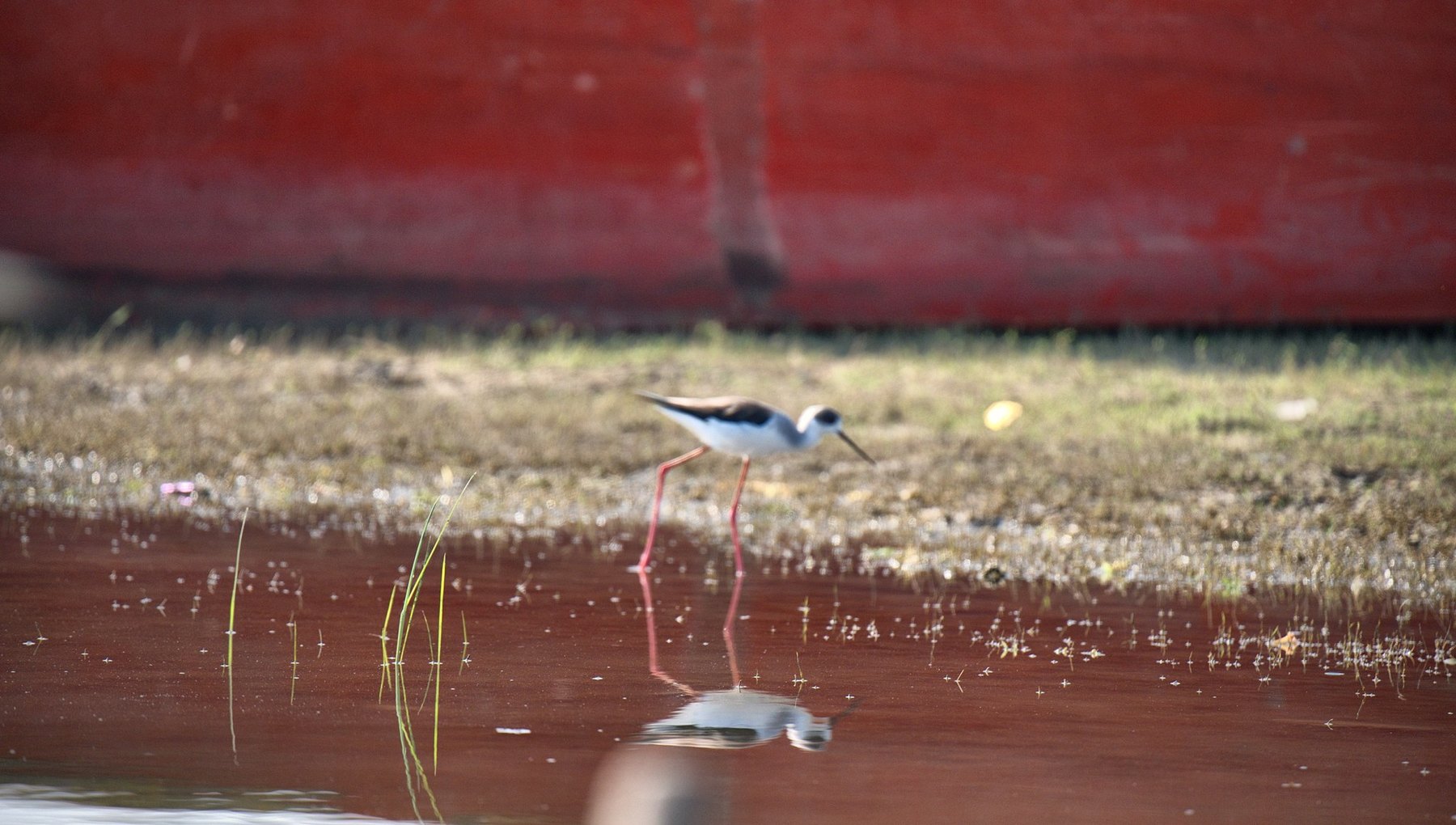
Great Egrets walked the shallows as if they owned them, and when one finally opened its wings and lifted off, we both forgot to breathe. An Indian Pond Heron sat on a post against a weathered red boat, so well camouflaged that it was invisible until it turned its head. A Black-winged Stilt picked its way through the reddish water on impossibly thin pink legs.
Behind the lens
For the birds I used a long lens and kept low, so the background would melt into soft colour and the bird would stand alone. The red boat behind the heron was luck, and I waited for the bird to turn side-on so its outline would read clearly against it. For Aaroh I did the opposite: a wider frame, his back to the camera, the hills and the egrets in the distance. I did not want a posed portrait. I wanted the feeling of a small boy facing a very big, very interesting world.
Maggi by the water
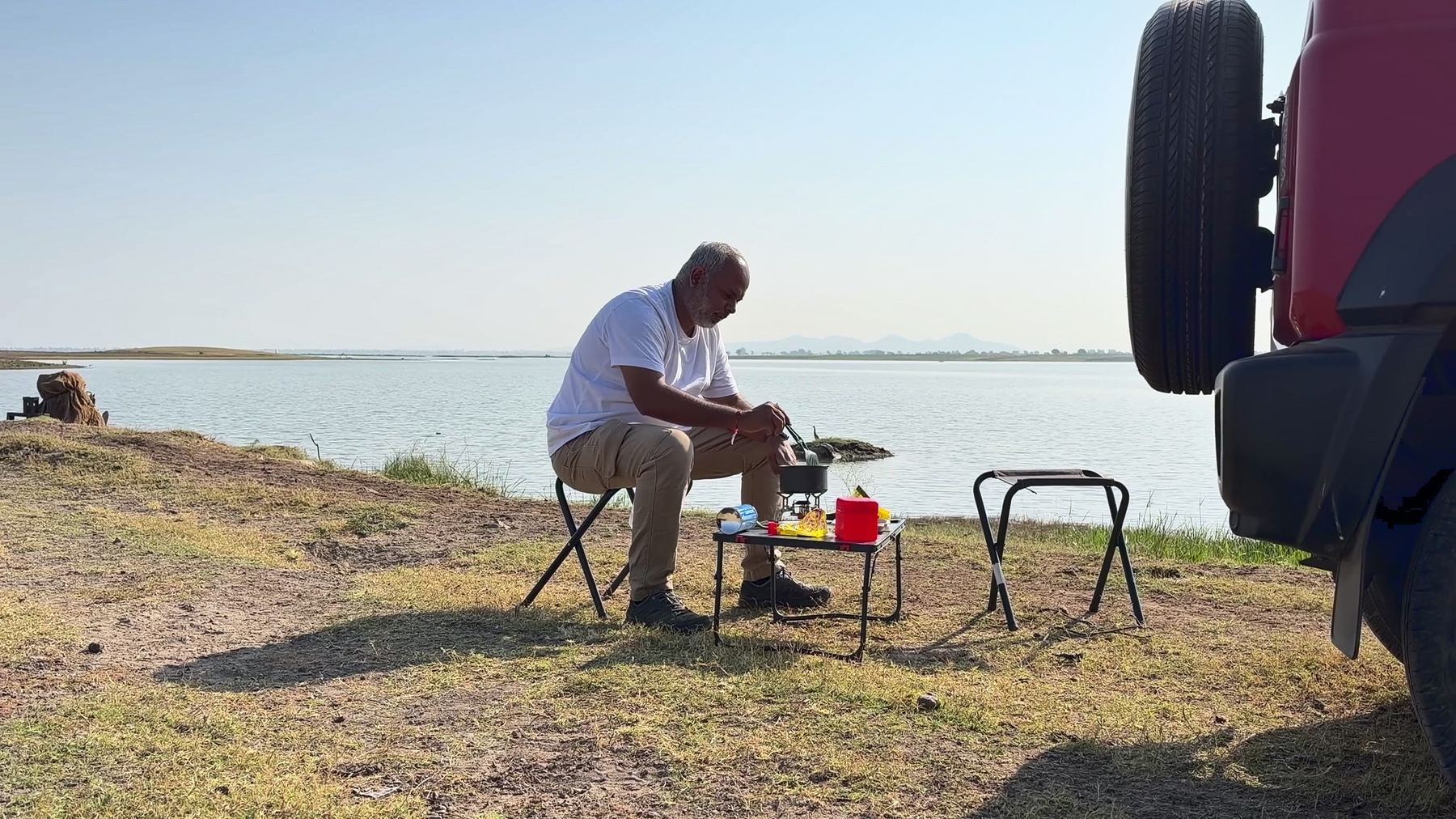
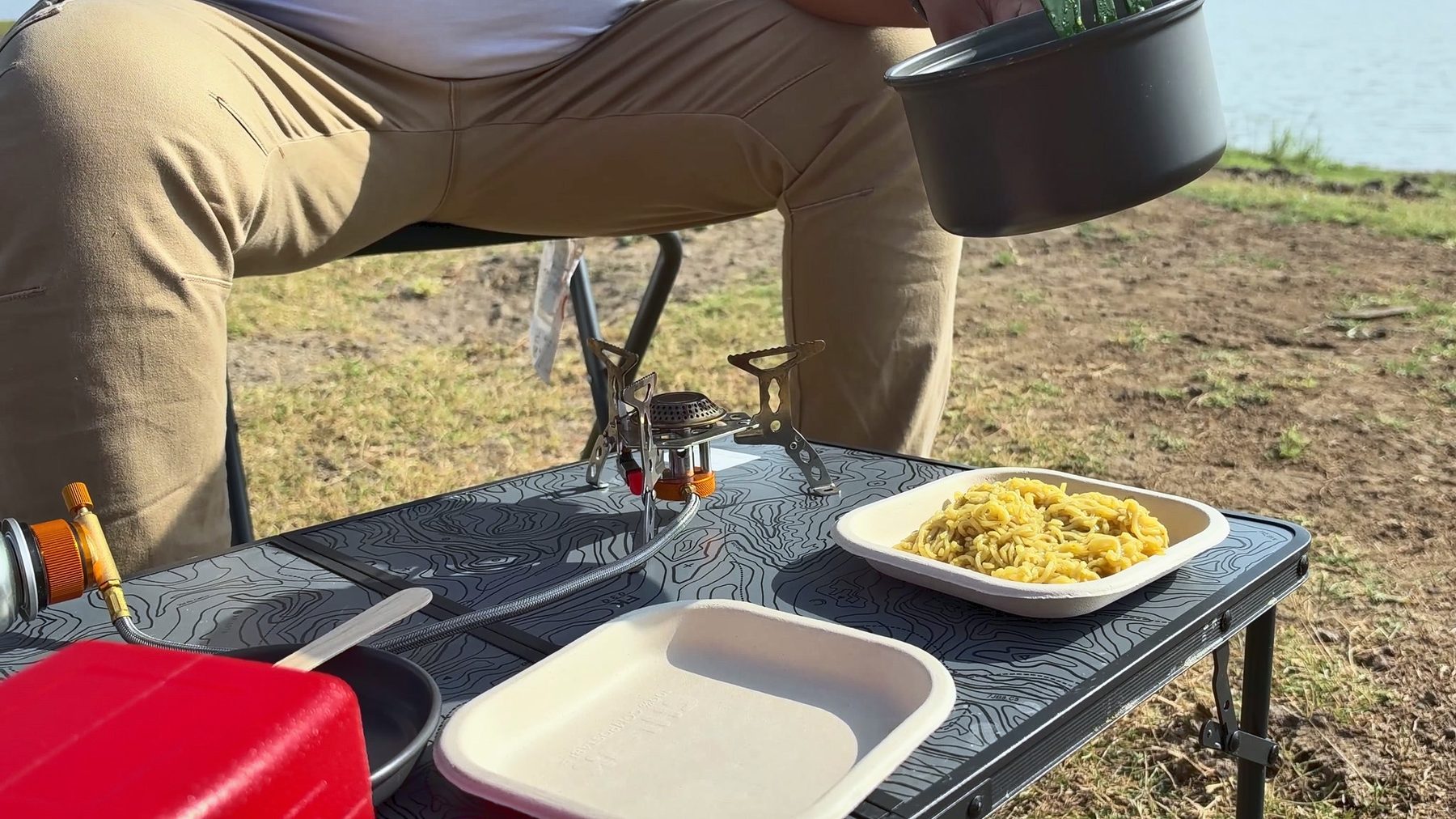
By mid-morning we were hungry. I set up a small camp table beside the Jimny, lit the stove and made Maggi with the lake behind us. The plates were paper, the salt was uneven, and according to my son it was the best Maggi of the year.
There is a parenting lesson hiding in that bowl too. Children remember the simple things we do with them far longer than the expensive things we buy for them. Nobody will remember the brand of the stove. Aaroh will remember that his father cooked for him in the open, and that it tasted like an adventure.
What a day outdoors teaches a child
I am not a child psychologist, only a father who pays attention. But after this trip I would put it simply:
- Patience. Birds do not perform on demand. Waiting for one teaches a child that good things often come to those who stay still and stay curious.
- Observation. Telling an egret from a heron means noticing size, colour, beak and behaviour. That is the same skill a child later needs for reading, science and people.
- Calm. A few hours without a screen, with wind, water and birdsong, slows everyone down, parents included.
- Confidence. When a child spots the bird first, he is no longer following an adult. He is leading. That feeling stays.
- Connection. Shoulder to shoulder, looking at the same thing, children talk more freely than they ever do face to face across a dinner table.
Tips for your first bird watching trip with kids
- Go early. Birds are most active in the first hours after sunrise, and the light is softer for photographs.
- Give them the binoculars. Let the child hold them and lead, even if they see nothing for the first few minutes.
- Make it a game. Keep a small list of every bird you see. A count turns a quiet morning into a mission.
- Pack a simple meal. A snack or a hot meal outdoors is a reward in itself and keeps the mood happy.
- Put your own phone away. The child will copy what you do far more than what you say.
The song, and the road home
When I edited the film, I knew it needed more than background music. It carries an original Hindi father–son song made for this trip, because some feelings are easier to hear in a melody than to say out loud. A father and a son on the same road: that is really all this trip was.
One day Aaroh will drive, and I will be the one in the passenger seat asking how far it is. I hope he remembers this morning: the dark road, the cold binoculars, the egret opening its wings over the water, and a father who, for one whole day, was not looking at anything else.
If you have been meaning to take your child somewhere, take them this weekend. It does not need to be far. It only needs you to be fully there.
Watch the full film on Roads Rewritten with Alok, and if you enjoy road trips around Gujarat, read about my Sunday ride to Dharoi Dam on the Royal Enfield 650.
Tell me in the comments: what is your favourite memory with your father, or with your child?