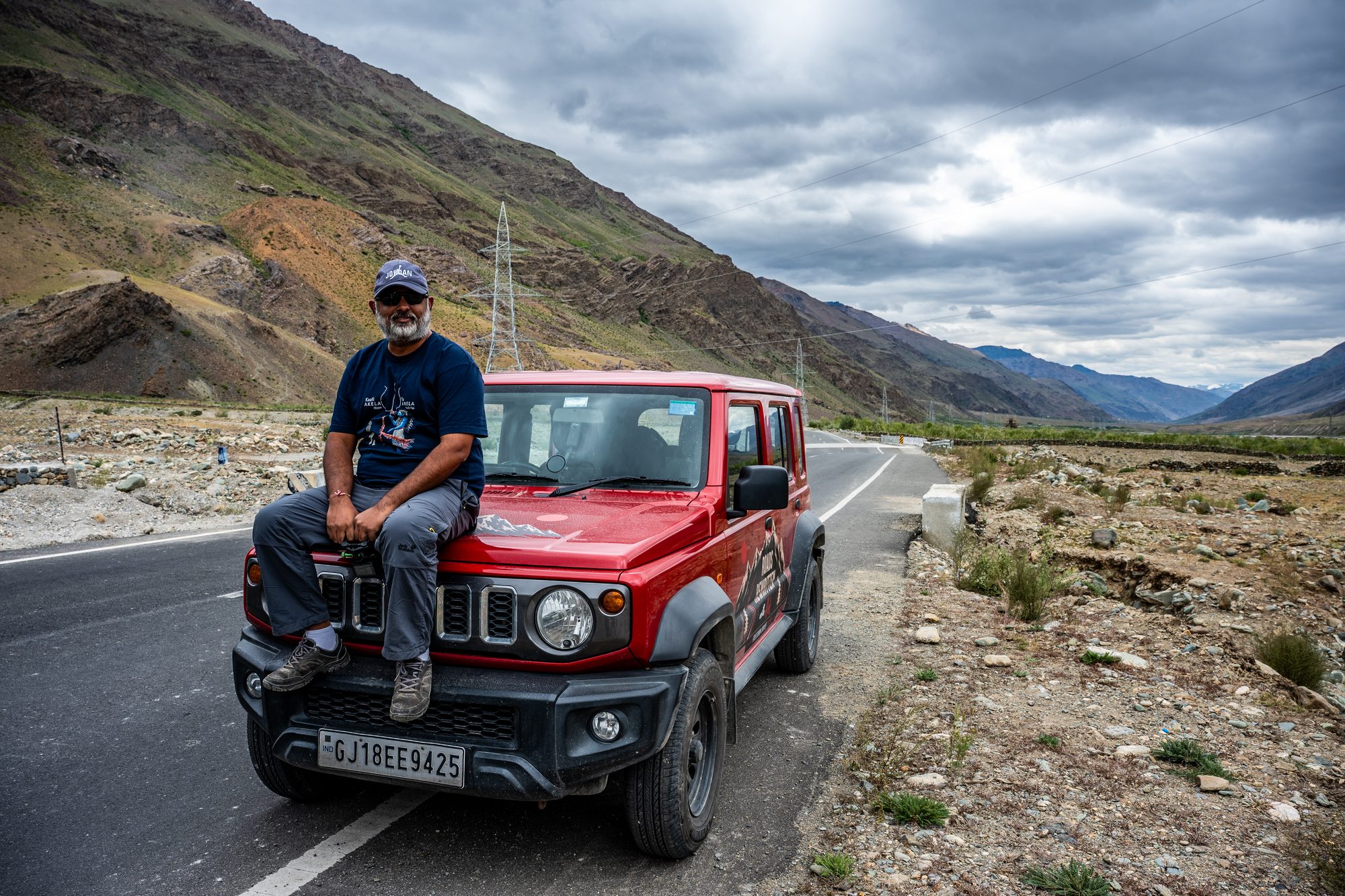
Three months ago, I asked a friend a fairly casual question. Harsh is almost twelve years younger than me, and I texted him something like: “I’m thinking of driving up towards Ladakh. You in?” I didn’t have dates, a route, a budget, or even a real reason beyond a feeling that I needed to go. Harsh didn’t ask a single question back – not how many days, not where we’d stay, not what it would cost. His answer was just, “Let’s go.” That one reply is where this entire trip’s plan was born. Or, more accurately, that’s where we decided the plan would be that there was no plan.
This trip didn’t really start on the road either. It started almost three months earlier, when I made a decision to step away from nearly two decades of corporate life – to leave a large Indian multinational and move into a completely new role at a young, dynamic company. For the first time in a long time, someone actually told me to take a break before joining. I liked that idea a little too much. I thought, why not disappear for two weeks – away from meetings, targets, emails and notifications, and maybe a little closer to myself. I didn’t know where I wanted to go. I just knew I wanted a road trip.
So two Jimnys, four friends, a stack of cameras, some preparation and a lot of uncertainty set off from Gandhinagar and Ahmedabad at around 10:30-11 in the morning. We stopped for the night at Kotputli, right on the Rajasthan-Haryana border, at a place called Hotel Highway King – the same place I’d stayed at last year on a previous trip. Decent rooms for about ₹3,000-3,500, good food, and a solid night’s rest before an early start. We were back on the road by 9 the next morning, aiming to reach Manali by nightfall.
The drive to Manali itself was smooth – the car cooperated, we were in good spirits, and for a while it felt like the trip was going to go exactly to our rhythm. We did our last-minute shopping in Manali before heading further up, including a very last-minute vegetable stop with a vendor driving his own little truck through the mountains – not quite what you picture when you think “grocery run,” but that’s the kind of shopping you do when you’re planning to cook your own meals higher up.
But no trip goes entirely to your plan, and ours definitely didn’t. The friend driving the white Jimny had a different idea in mind, and the rest of us simply followed. That’s how we ended up in Rashil – a small mountain village in Lahaul at close to 2,800 metres, tucked just off the usual tourist route. The road there was beautiful but not easy. It was a long drive, we were tired, and at more than one point I genuinely wondered what we’d gotten ourselves into.
That’s when it hit me – this is exactly what life does too. We plan for one thing, and the road takes us somewhere else entirely. Not every road needs to be beautiful for the whole stretch, and not every day needs to be exciting, whether you’re talking about a road trip or a career. Some stretches simply exhaust you before they reward you.
And Rashil did reward us. We arrived tired and overheated, but the night more than settled the score. The sky filled with more stars than most of us, grown used to city lights, could ever remember it holding. It made me think that life works the same way: the path rarely makes sense in the daylight, but every so often, night reveals a kind of beauty you weren’t expecting at all. That felt like a fitting metaphor for the professional chapter I was about to start too – a new road, new people, an uncertain destination, a few difficult stretches, and hopefully a few beautiful surprises I couldn’t have predicted.
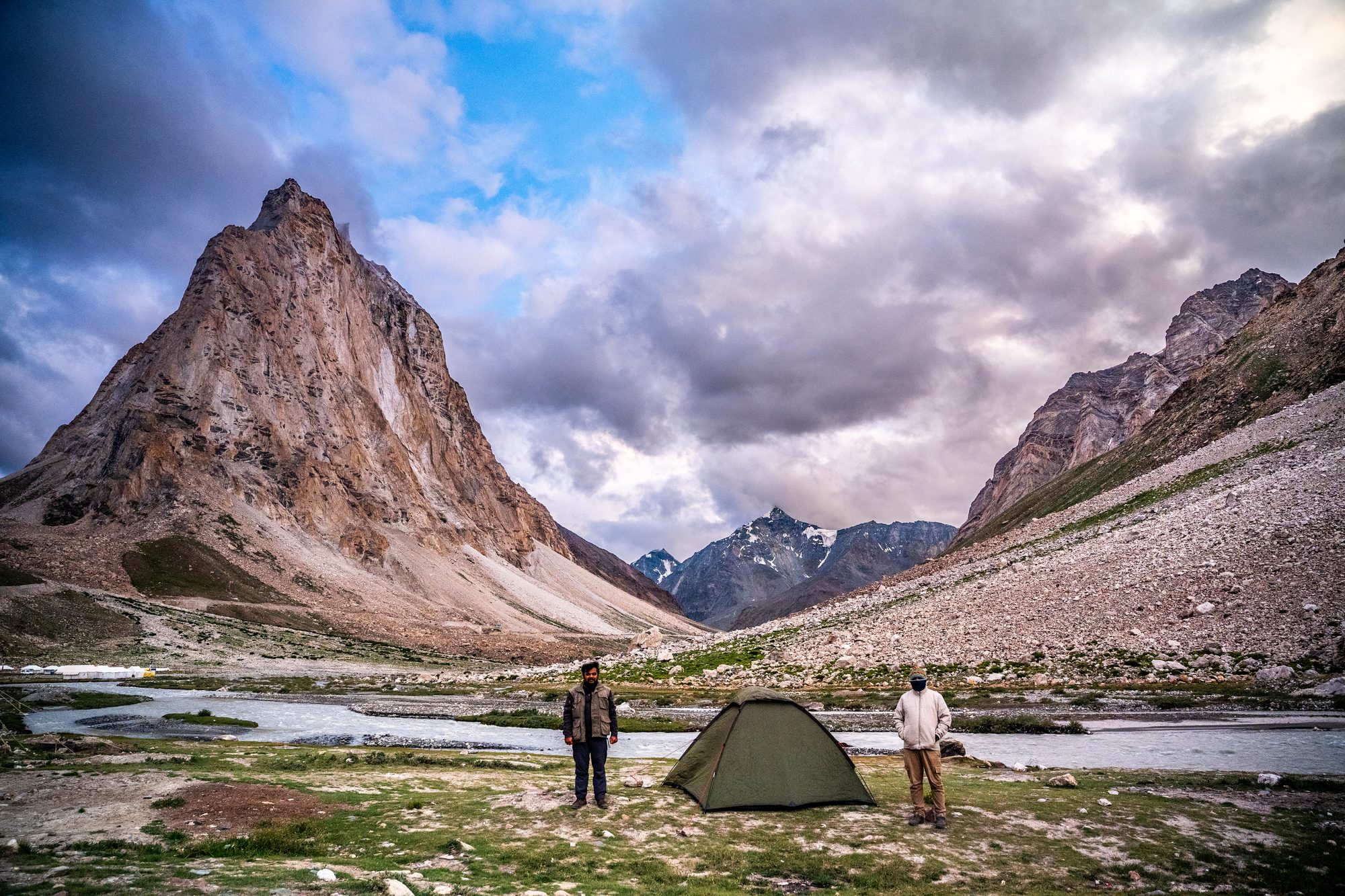
Rashil also gave us Puneet Bugi, a local from the village who runs a small homestay with his aunt’s family. He walked us through how the Lahaul-Bhutan valley economy runs almost entirely on farming – cauliflower and peas already harvested by the time we arrived, English vegetables being grown for the season, apple orchards, potatoes, even a few medicinal plants. Since the Atal Tunnel opened, tourism has become a second income stream for the valley – homestays and small hotels have been springing up along the highway, and entire villages are gradually shifting toward welcoming travellers like us.
Higher up, at Shinkula Top – 16,500 feet – the trip turned into something else: a chance to actually be useful to strangers. We ran into two bikers from Bengaluru and Hyderabad whose bike had a punctured tyre and an inflator that wasn’t doing the job because the tube had already given out. Harsh got to work and had it fixed within minutes. A little further along, we found Raja bhai stuck with a flat tubeless tyre on a rented Himalayan. We had the tubeless puncture kit and the inflating machine, so we stopped and helped him too. Everyone was a little breathless at that altitude, and getting anything done – let alone fixing two flat tyres back to back – isn’t easy at 17,000 feet. But that’s genuinely what this channel, and this trip, is about: meeting interesting people, connecting with the world and with nature, and enjoying the moments as they come rather than the ones you’d scripted.
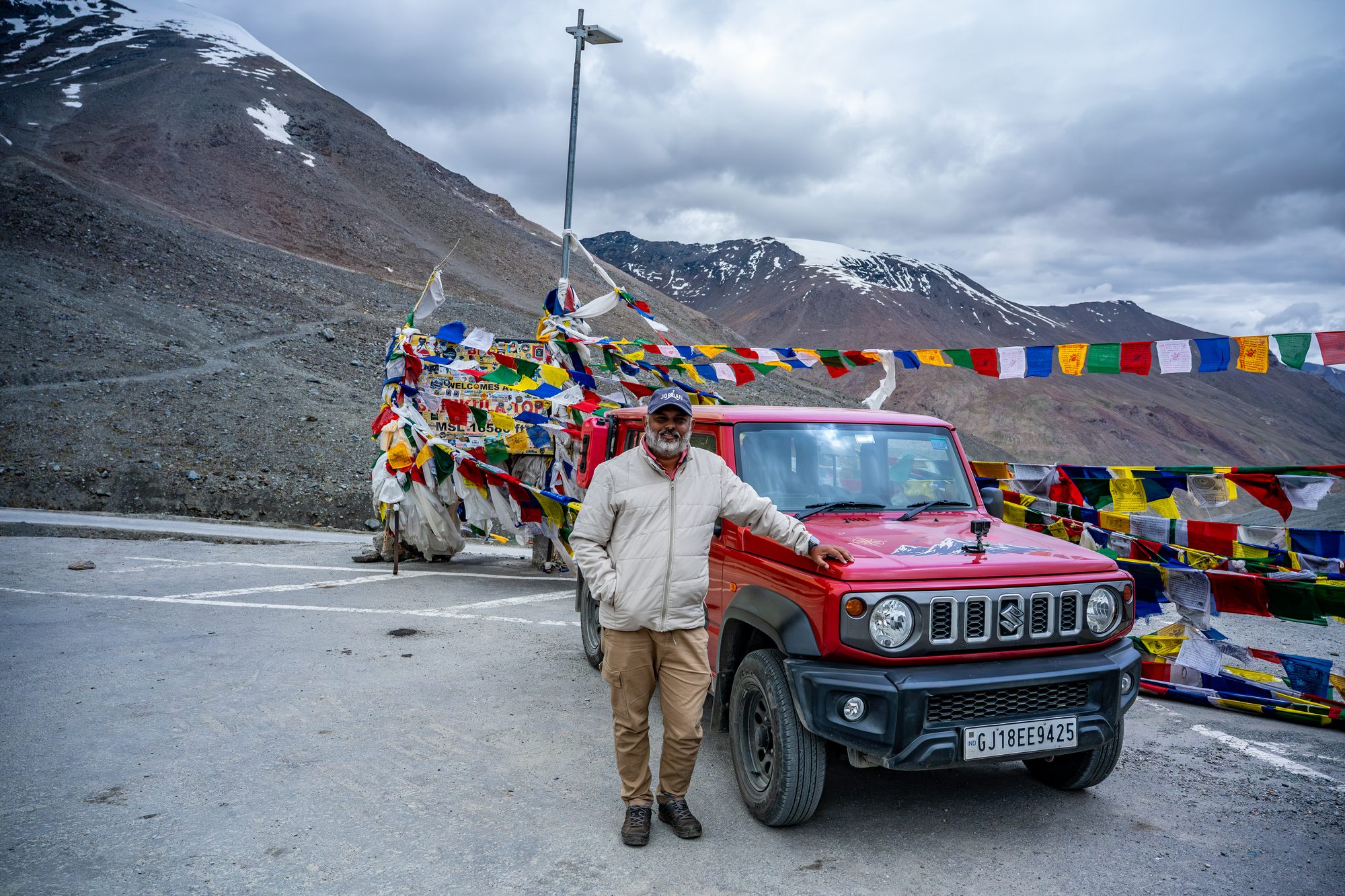
Part 1 of Freedom Drive ends here, somewhere between Manali and Shinkula Top, with two fixed tyres, a village that taught us about farming and homestays, and a sky full of stars that put a long, tiring day into perspective. The road ahead leads to Zanskar, Leh and Ladakh, and a lot more of both the difficult stretches and the beautiful surprises. If there’s one thing this trip has already taught me, it’s this: you don’t always need a plan. Sometimes you just need one friend who says “let’s go,” and the willingness to let the road decide the rest.
Watch the full Part 1 of Freedom Drive on our YouTube channel, Roads Rewritten with Alok, and tell us in the comments – would you ever take a road trip with literally no plan?
Continue the journey: Freedom Drive Part 2: Zanskar, Hanle’s Milky Way, Changthang and a Night at Tso Moriri