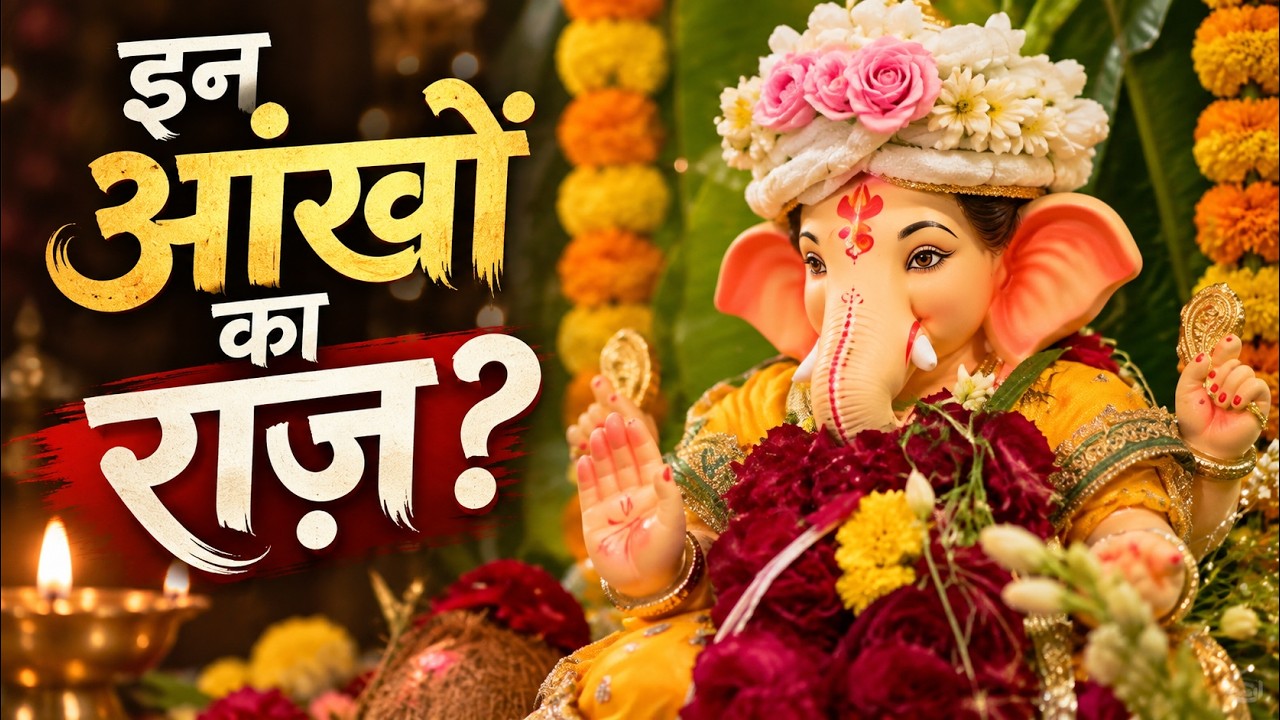
There’s a moment every year, right before Ganesh Chaturthi, when I catch myself staring into a pair of painted eyes, and for a second, forgetting they’re made of clay.
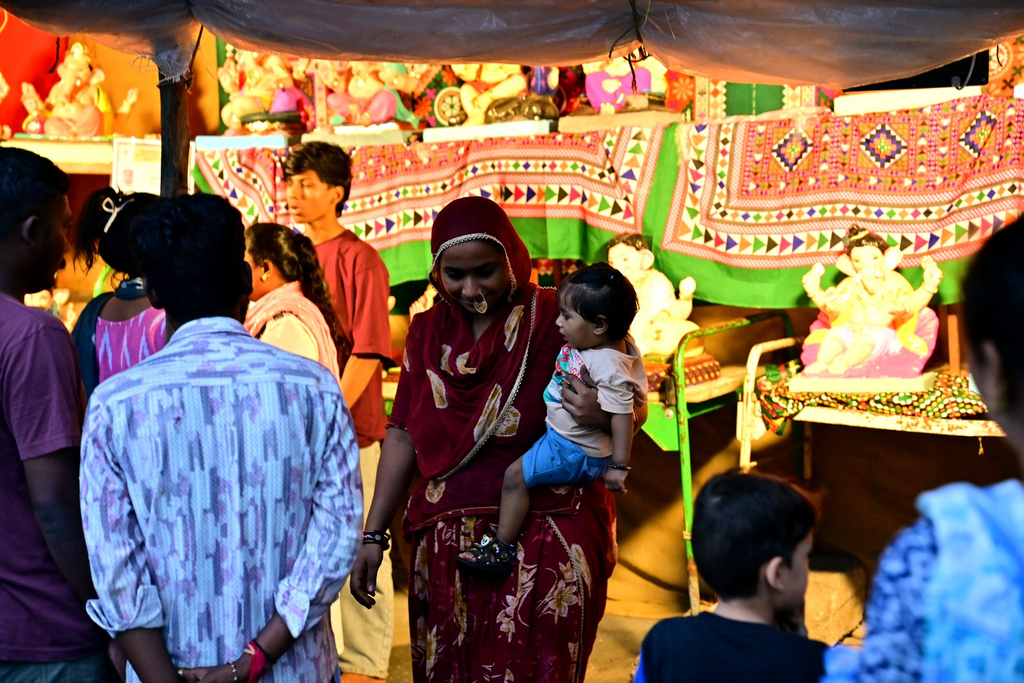
That’s the moment that took me to Gulbai Tekra this Ganesh Utsav.
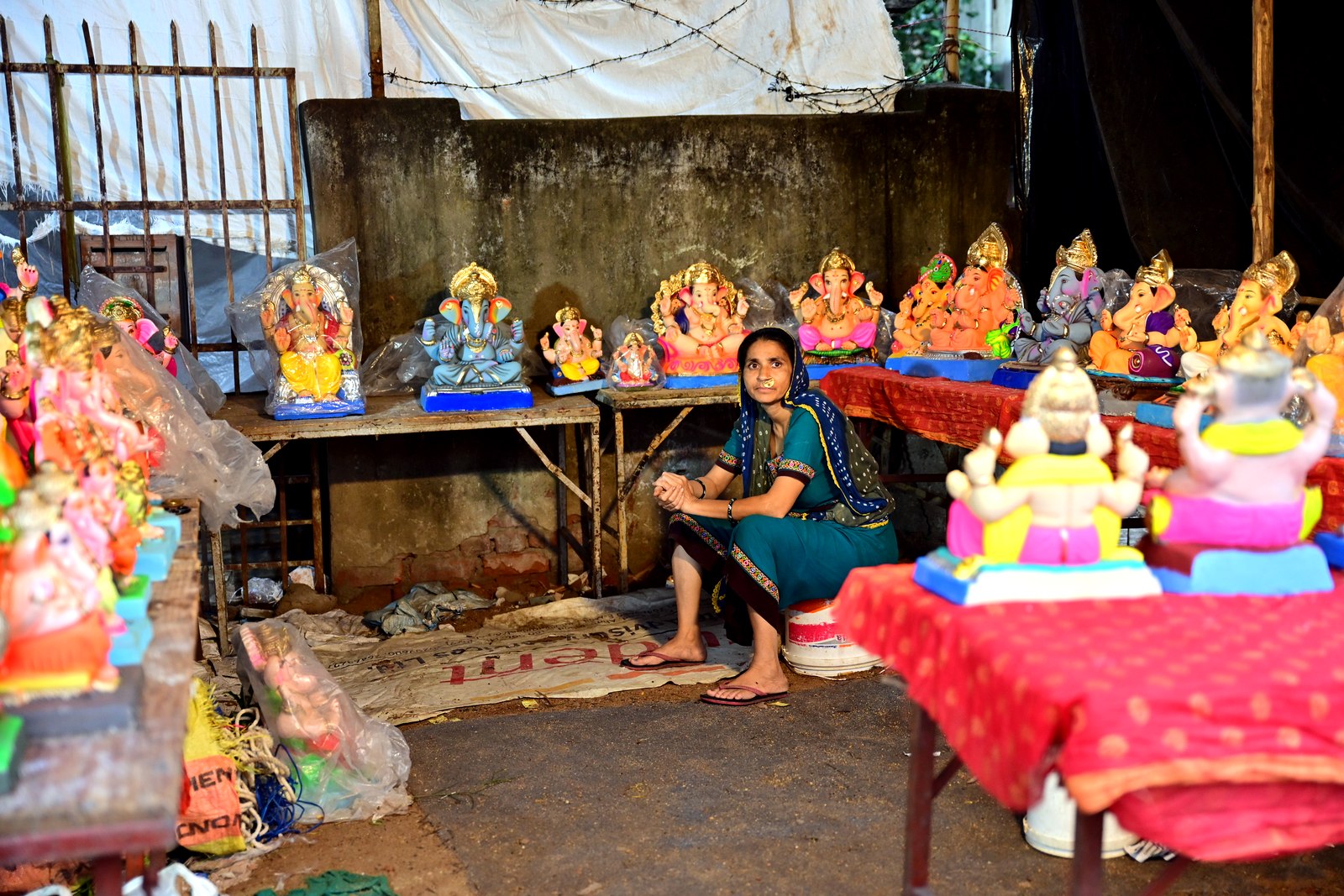
Tucked into the older lanes of Ahmedabad, Gulbai Tekra is where the Bawari community has shaped Ganesh idols, and other deities, for generations. Clay, plaster, colour, a small brush, and a hand steadied by years of practice: that’s really all it takes to build a face that, within days, thousands of people will carry home and call God.
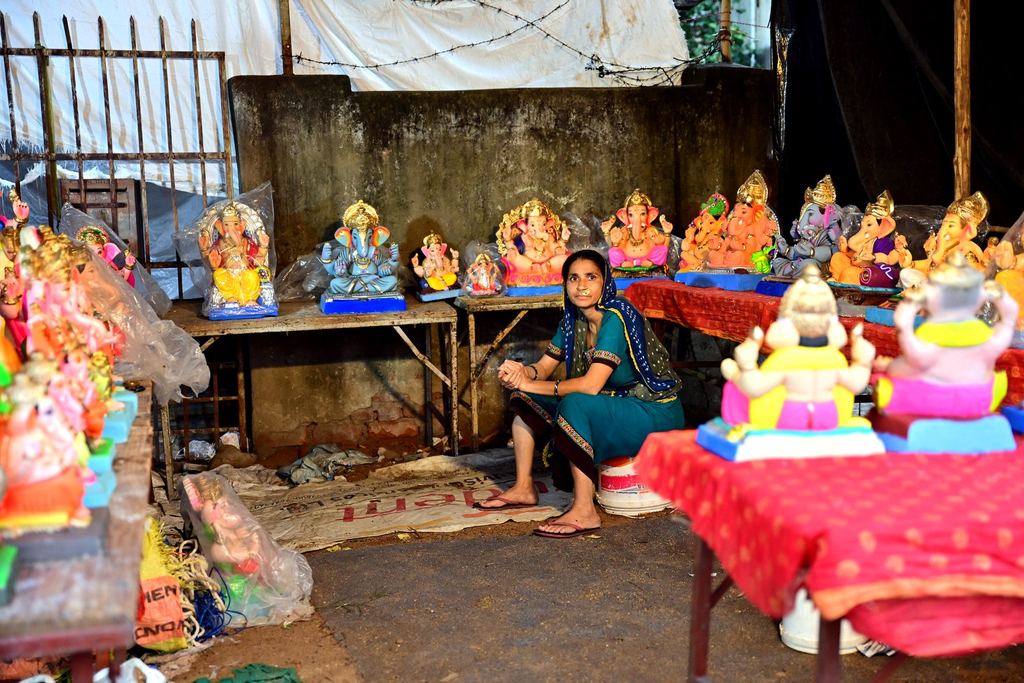
I didn’t go there to document how an idol is made. I went with one question in mind: at what exact moment does a craftsman’s work stop being craft, and become someone else’s faith?
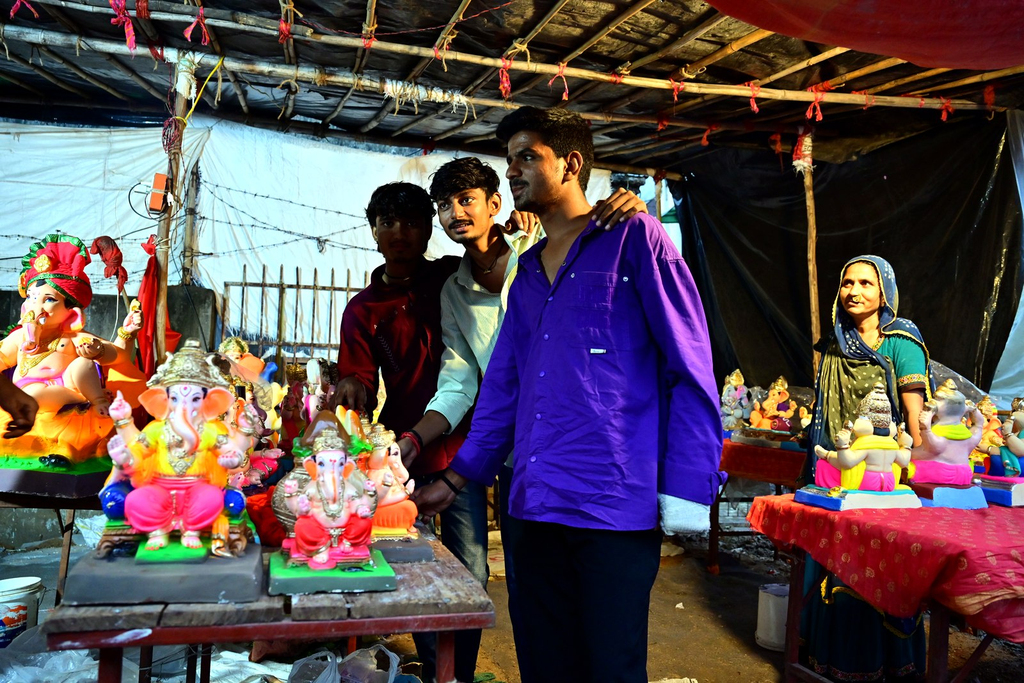
For the artisans of Gulbai Tekra, mud and colour aren’t just material. They’re livelihood, and they’re inheritance. Through the days of Ganeshotsav, these lanes stay busy from morning to evening: someone picking a Bappa for their home, someone else choosing one for a pandal, and plenty who’ve come just to look. Every idol is different, but there’s one thing every single one is judged on: the eyes.
Because Ganesh ji’s eyes aren’t just a part of the face. They have to hold compassion. They have to hold warmth. And more than anything, they have to give a devotee the feeling that Bappa is looking back at them. That, I think, is the exact moment a craftsman’s art turns into someone’s faith.
But Ganesh Utsav has never really been only about the idol.
Ganesh is Vighnaharta, the remover of obstacles, the god of wisdom and good sense. Invoking him before any new beginning is a reminder that a start should be built on the right intention, not just the wish for success. Even his form carries a philosophy: the large head for expansive thinking, the big ears for listening before speaking, the small eyes for focus, and the mouse, his restless little vehicle, kept firmly in the grip of wisdom.
The Ganesh puja itself is ancient, but the public Ganeshotsav we know today took shape only in the late 19th century, and it happened because of Lokmanya Bal Gangadhar Tilak. Around 1893, at a time when public political gatherings were tightly restricted under British rule, Tilak moved Ganesh worship out of homes and into shared public spaces. People gathered, exchanged ideas, organised cultural programmes, and slowly, the festival became a quiet vehicle for social unity and, eventually, for the consciousness of the freedom movement.
Maybe that’s still the most beautiful part of Ganeshotsav: in front of Bappa, we’re all equal. We each arrive with our own troubles and our own hopes, but in front of that one lamp of the aarti, we stand together. Because Vighnaharta doesn’t just mean removing the obstacles in my path, it can just as easily mean removing the distance between us.
And when that same idol, the one an artisan in Gulbai Tekra gave its eyes to, finally reaches someone’s home, it isn’t just a statue arriving. It’s hope. It’s belief. It’s something words don’t quite reach. Maybe that’s why, when we look into those eyes, we don’t see paint. We see our own Bappa. And maybe that’s the real power of art: a craftsman shapes a form out of mud, and our faith finds God inside it.
Ganpati Bappa Morya. 🙏
I made a short film about this walk through Gulbai Tekra, watch it here: https://youtu.be/75uAQ8tC5YU