At 17,000 feet, a stranger shook Harsh’s hand and said, “Getting this help up here is not an easy thing.” We had just helped fix his puncture. Nobody had planned that moment. Looking back, it summed up the whole second half of Freedom Drive: roads we hadn’t picked in advance, plans that fell apart, and people who became part of the story.
In Part 1, two Jimnys and four friends drove out of Ahmedabad with no real itinerary and ended up in Lahaul. Part 2 goes deeper, through Zanskar, Leh, Hanle, Changthang and Tso Moriri, and then back home. By this point the road was choosing where we went, not us.
Gonbo Rangjon: God’s Own Mountain
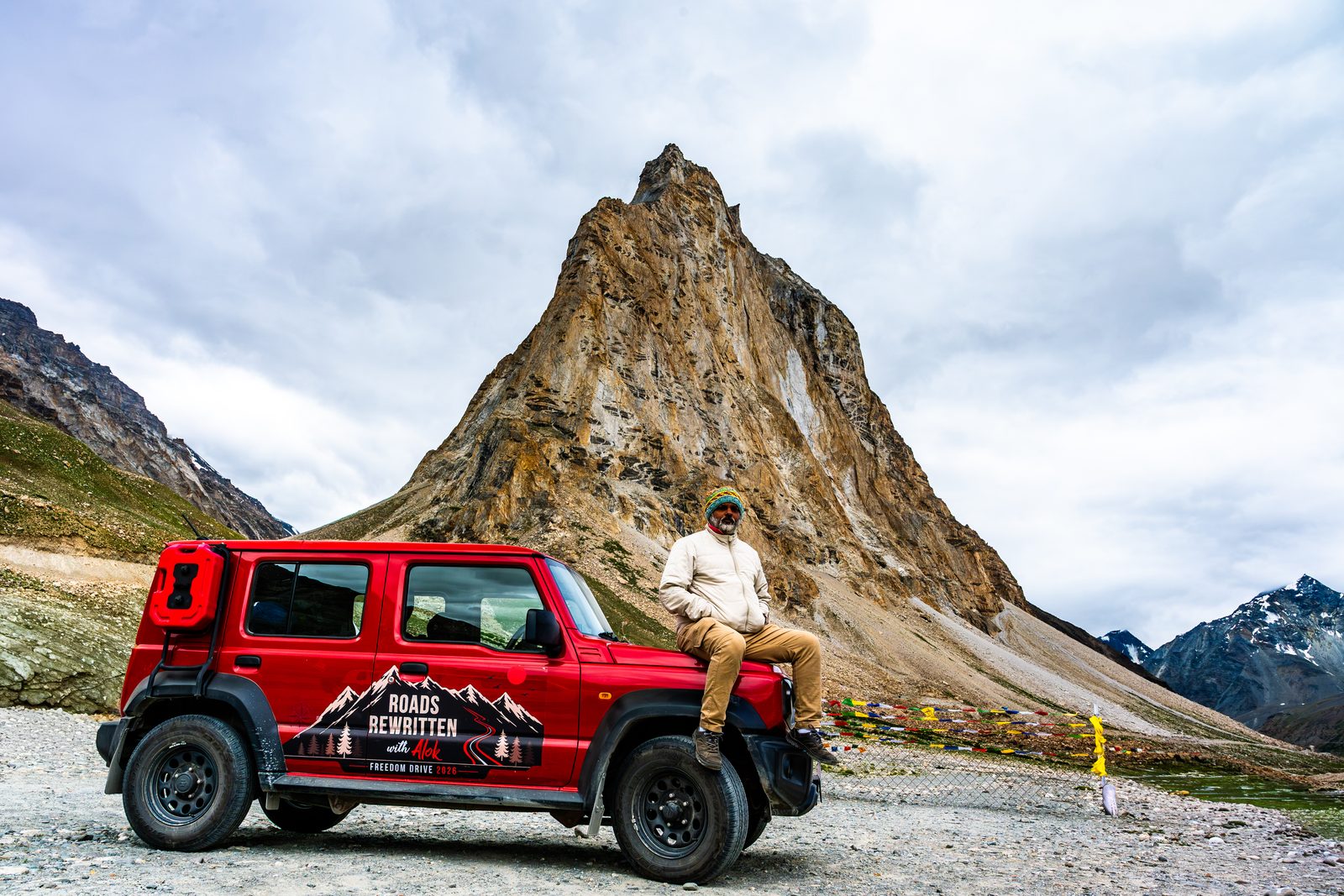
Driving through the Zanskar valley, we reached Gonbo Rangjon. Locals call it God’s own mountain, and once you see it you understand why. It doesn’t look like something that was built up slowly over time. It looks like a shape that came down from the sky and decided to stay.
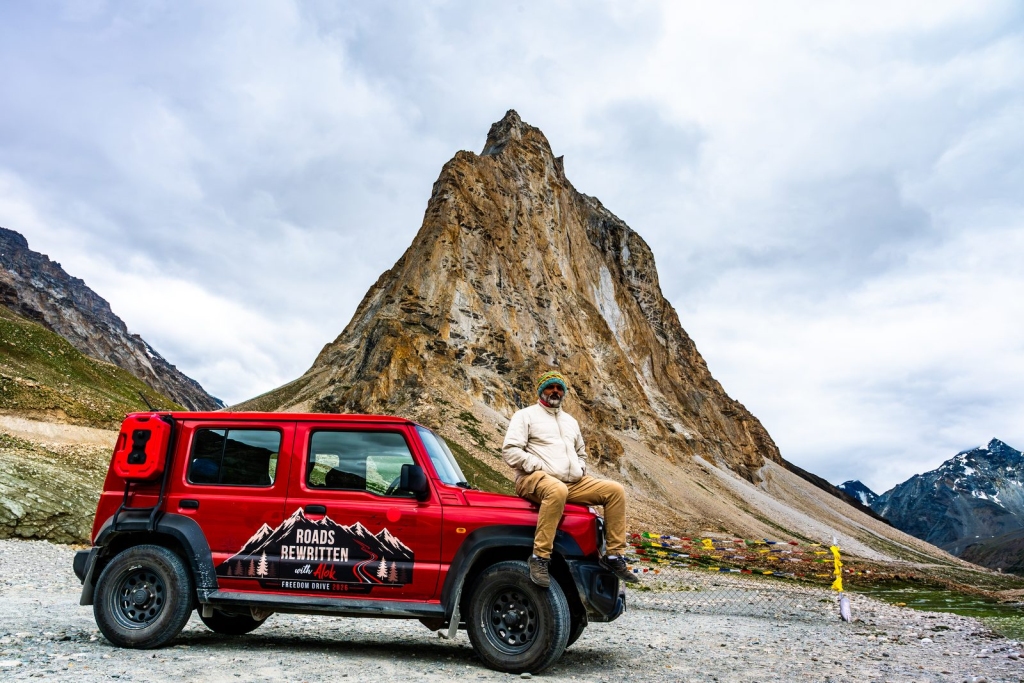
The plan was to camp right there: sleep under the open sky and, if we were lucky, see the Milky Way with our own eyes. Vinay and Prashant decided to drive about three hours further to Padum. Harsh and I stayed back and pitched our tent.
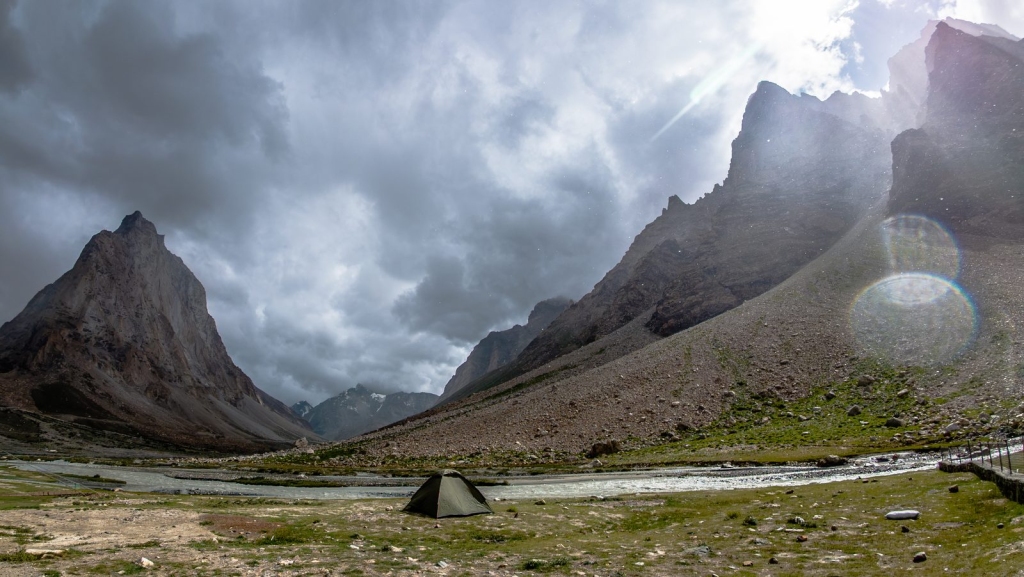
Nature didn’t care about our plan. By evening the wind picked up, the temperature dropped and then it started to rain. The clouds got so thick that we gave up hope of seeing even one star. We cooked and ate in the cold rain, then looked at each other and asked: stay, or go? We packed up the tent, loaded the car and set off into the mountains in the dark.
When the Plan Failed, the Sky Opened
At around 10 pm we were somewhere in the middle of the road with only darkness around us. No town, no lights, no people. In several hours we had passed maybe three vehicles. We stopped the car, and what happened next is not something anyone could have planned.
The clouds began to break, and there it was: the Milky Way, right across the same sky that had written itself off a few hours earlier. It felt like nature had heard us. We stood there for more than an hour. No music, no talking, just starlight and a world that seemed to go on forever.
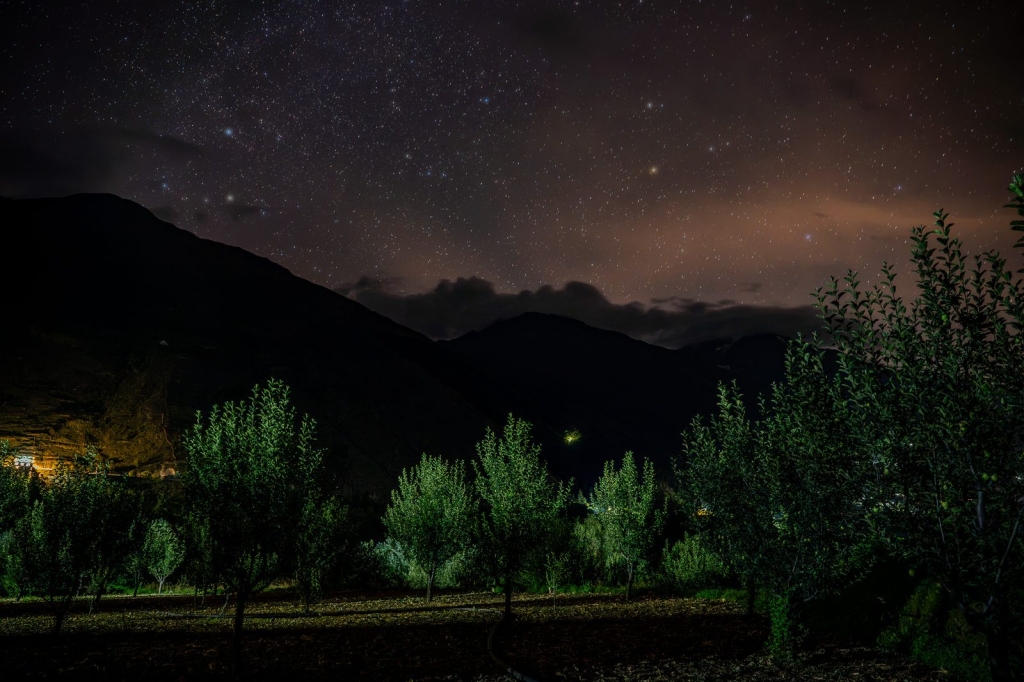
Sometimes a failed plan turns out to be the most beautiful outcome.
Padum and the Heart of Zanskar
It was late at night by the time we reached Padum. Over the next two days Zanskar gave us everything we had driven so far for: snow peaks, glaciers, high passes, and a silence deep enough to hear yourself think.
Padum isn’t just a stop in Zanskar. It’s a place where life slows down between the mountains. There’s the huge Drang Drung glacier, the one-of-a-kind world of Phuktal Monastery, and small villages along the Zanskar river where life still happens very close to nature.
Four Became Two
Every journey reaches a point where some people turn back and others keep going. Vinay and Prashant had to go home to Ahmedabad. We had started as four; now we were two, with no firm plan for where to go next. There was just one question: where now?
Life is like that too. Some people walk with us up to a certain point, and then our paths split. That doesn’t mean the journey is over. The road has just changed.
Padum to Nimmu: Back on the Chadar Route
For us, Padum was the start of a new road: the newer, shorter route from Padum towards Nimmu, heading straight for Leh. What makes this route special is that in winter the Zanskar river freezes, and people walk on the frozen river itself. That’s the famous Chadar Trek.
For me this was pure nostalgia. I did the Chadar Trek in 2018, walking from the Leh side past Tip Cave. This time I drove the same stretch on smooth, beautiful new roads. I couldn’t even find the waterfall I remembered; I must have missed it somewhere along the way. The roads are amazing now, but part of me wonders if some of the Chadar’s old charm has gone.
In summer we were driving between the road and the mountains. In winter the same route turns into a sheet of ice. One place, two completely different faces. The road stays the same, but when the season changes, so does what it means.
Leh to Hanle, and a New Beginning
We spent half a day in Leh, picked up a few supplies and, without thinking too much about it, headed for Hanle. It sits at around 14,000 feet near the India–China border, and a few days earlier I hadn’t even considered going there.
When one road ends, the next one isn’t always visible. You still have to keep moving, because sometimes trusting yourself on an unknown road matters more than the destination. On that drive I realised my new professional journey was just like this. The old destination was behind me and the new one wasn’t clear yet. But I had a quiet confidence that I would handle whatever came next. Maybe that was the real Freedom Drive.
Hanle: When the Sky Surprised Us
Freedom Drive brought us to Hanle, a small, very quiet place at about 13,800 feet. There are mountains as far as you can see, very few people, and a sky that feels close enough to touch. We stayed at a very simple homestay. Our biggest hope was Hanle’s night sky and the Milky Way.
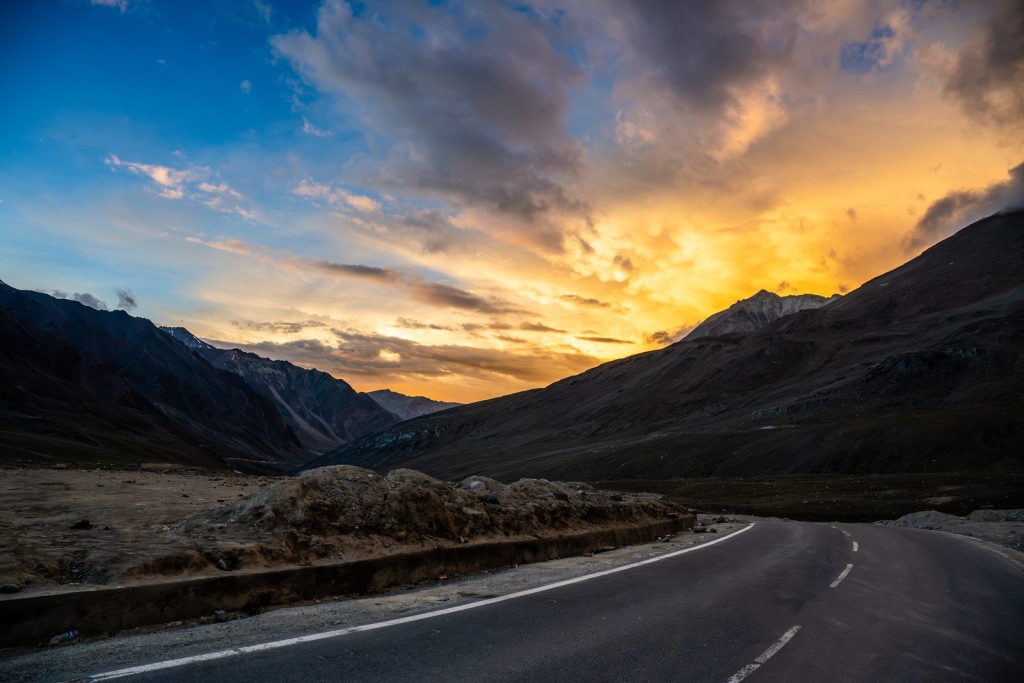
But clouds covered the sky all day. Then evening came, and as the sun went down, the same clouds that had been annoying us filled the mountains with colours we just stood and stared at. Sometimes nature takes the thing we think is in the way and turns it into something beautiful.
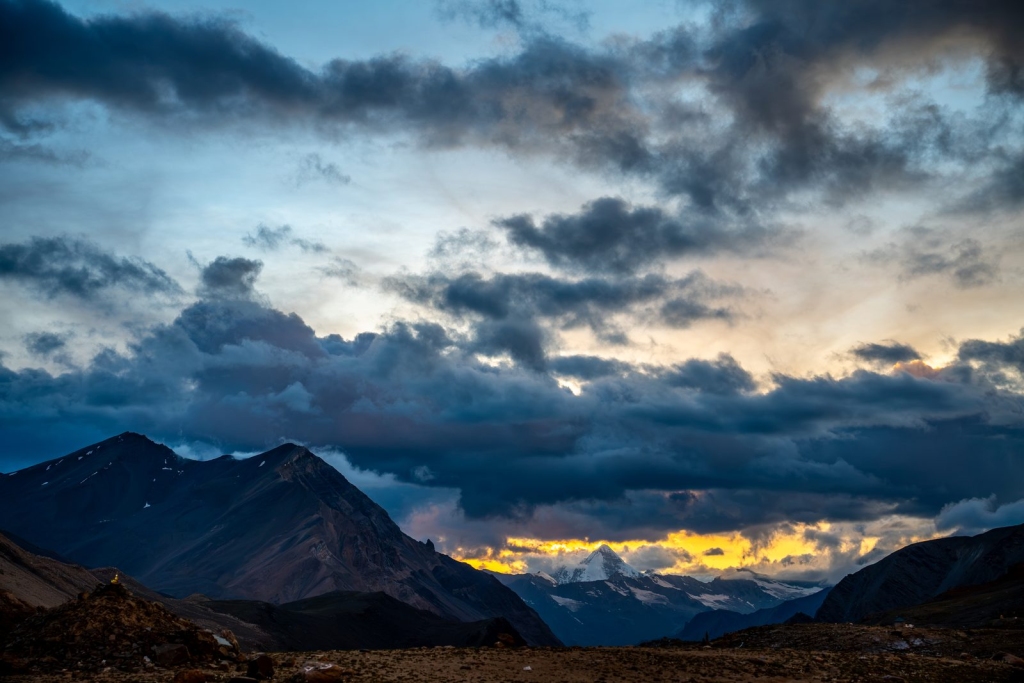
Hanle isn’t just a remote village. It’s counted among the best places in the world for astronomy. The Indian Astronomical Observatory sits here at about 14,760 feet, and scientists study deep space through the 2-metre Himalayan Chandra Telescope. We visited the observatory, and standing there I kept thinking about how far humans have come just to look at the universe.
By nightfall the clouds were back, and we had almost given up on the Milky Way. Life does this too. We plan, we picture something in our heads, and then life puts clouds over that picture. We feel let down and ask why things didn’t go the way we imagined. But maybe the story isn’t finished yet.
A few hours later the wind had picked up and the temperature kept dropping. Then, slowly, the clouds began to move. A small patch of sky cleared, then a bit more, and suddenly the whole sky was full of stars. The Milky Way. We were speechless. We stood outside for hours in the strong wind, below 10°C, with the cold getting into our bones. Nobody wanted to go inside. We could feel the cold, but we could feel the moment far more.
That night Hanle taught us something. Clouds can hide the sun all day, but the same clouds make the sunset more beautiful. And at night, the same wind that made things hard for us is what carried the clouds away and opened up the Milky Way. Problems often feel like they’re blocking the road, but sometimes they’re taking us somewhere we couldn’t have imagined. So don’t judge a situation only by whether it went the way you planned. Give it some time and live through it.
A cloudy evening can still be beautiful, and a windy night can still be full of stars.
Changthang and the Changpa Way of Life
With Hanle’s sky tucked away in our hearts, we moved on to the Changthang Festival. It was a chance to see up close how the Changpa community lives in one of the harshest parts of the Himalayas.
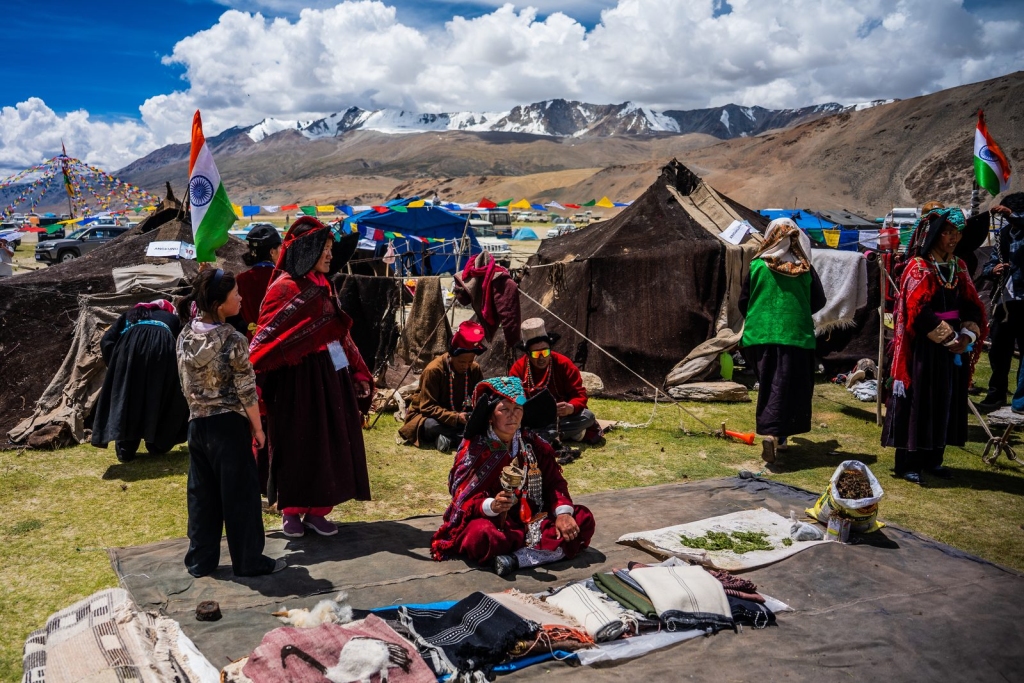
Their traditional life depends on herding yaks, sheep and goats, and above all the Changra goat, whose extremely fine wool becomes the world-famous Pashmina. They live with harsh weather, strong winds, high altitude and few resources, yet there was an ease in the way they lived. Living in cities, we sometimes make comfort the whole point of life. Watching the Changpa, I felt that you can live a full life with far fewer comforts.
Tso Moriri: Sand, a Rescue and Two New Friends
From the festival we drove to Tso Moriri and started looking for a spot to camp on its shore. In front of us was a pristine blue lake with mountains all around, and the kind of silence you only find in very remote places.
While we were looking for a campsite, we found a few vehicles stuck in the sandy lakeshore. So the Jimny went to work, and we spent a while pulling them out. We had come to set up our own camp, but making things a little easier for someone else was probably the best part of that evening.
Then we met Shubham and Pannu, a lovely couple travelling across India in their modified camper van. Inside there was a small kitchen, a bed, and a little home on four wheels. A few hours earlier we were strangers. That night we sat together like old friends.
Outside, the wind was howling and it was about 10°C and falling. We made Gujarati khichdi, and the pressure cooker whistled right there on the shore of Tso Moriri. They made rotis and egg curry for us. At one point the wind was so strong that I had to hold our tent down with both hands while dinner cooked. Then came hot gulab jamun to finish the meal.
Eating with new friends in the cold wind by Tso Moriri, with Ladakhi music playing and everyone swapping travel stories: I don’t think that night could have been any better. Maybe that’s the most beautiful thing about life. You set out on a road, and the road introduces you to people you never planned to meet.
The next morning, after hot upma from Pannu’s kitchen, we said goodbye to Shubham and Pannu and started heading home.
Puga Hot Springs and the Road Home
From the nomadic festival we drove via Puga towards Manali. Puga has hot water springs, but to reach them you first have to cross a stream of crystal-clear, freezing cold water. I made it across, shivering, while the locals were happily bathing and playing in the water as if it were nothing.
Behind us we left the blue waters of Tso Moriri, the winds of Changthang, the lives of the Changpa, that music, and an evening we had never planned. That’s when I realised Freedom Drive wasn’t just a road trip. It was a story about the people and moments we met on the way. Some walked with us, some went back their own way, and some strangers became part of our story in just a few hours.
What 13 Days on the Road Taught Me
Between two jobs, I decided to take a road trip without planning anything. Go wherever I wanted, whenever I wanted. Ahmedabad to Manali, then Zanskar and Gonbo Rangjon, which had been on my bucket list for years. Padum, then Leh, then Hanle, where I was lucky enough to see the Milky Way twice, a sky I could never see from the plains of Gujarat. Then the Changthang nomadic festival, and back through Manali towards home, recharged for the new job and the new beginning.
I didn’t come back with some big philosophy. I just felt a few things. Not everything is in our control. Not every road is easy. And you can’t schedule every beautiful moment in advance. But maybe the real joy of travelling is exactly that: living fully whatever comes your way.
I left home to take a pause, to get away from my old routine. On the way back I realised I had found more people than roads, more memories than destinations, and maybe a slightly better understanding of myself. In the end you don’t remember every kilometre. You remember the people, the nights, the unplanned moments, and the feeling that life once again gave you something more beautiful than anything you had planned.
Freedom Drive started from home and became a story about meeting myself along the way.
Watch the full Part 2 film above, and if you haven’t already, subscribe to Roads Rewritten with Alok on YouTube for more journeys. And tell me in the comments: where should the road take us next?